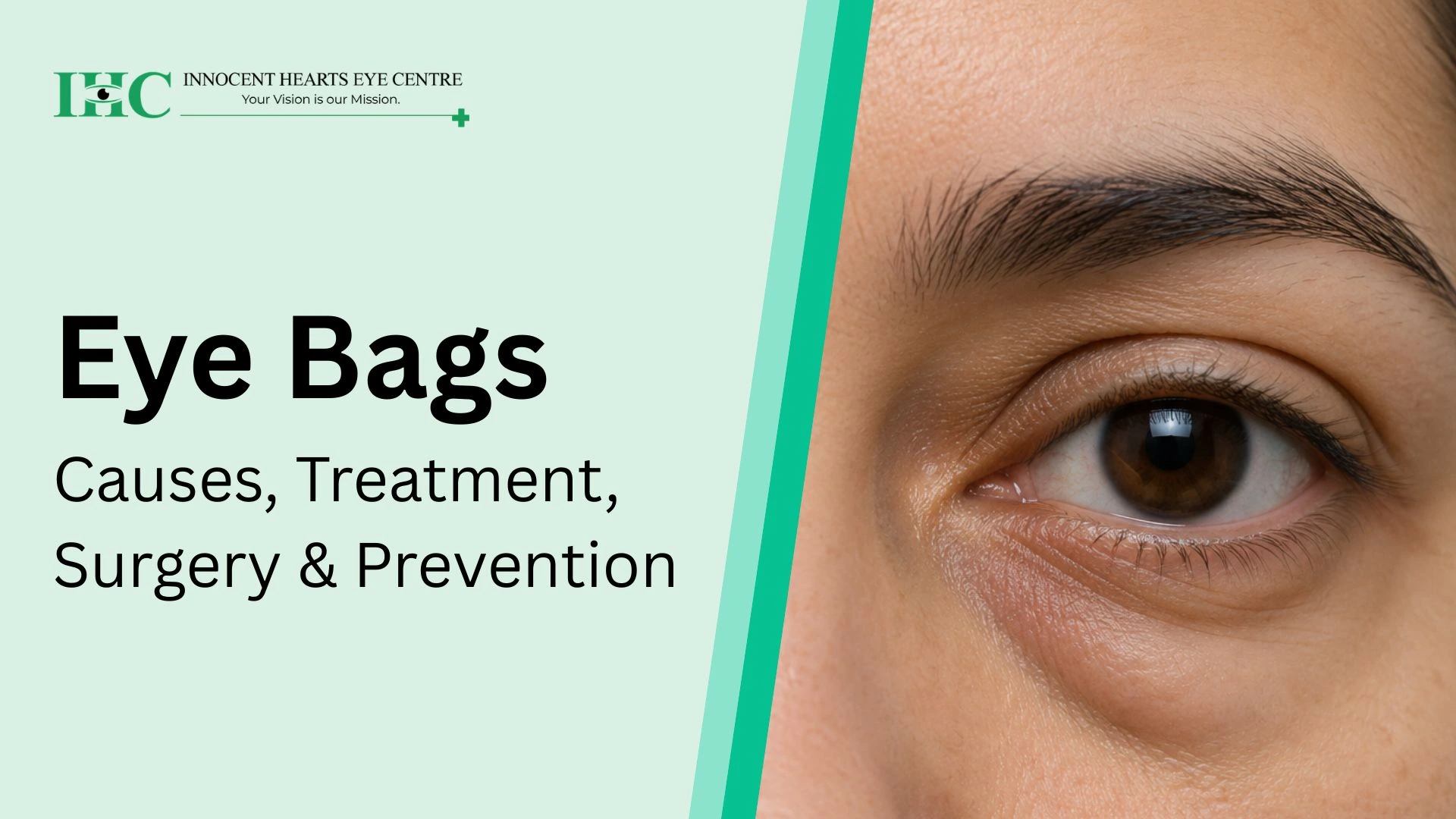
Eye bags are mild swelling or bulging beneath the lower eyelids caused by ageing, genetics, weakened eyelid tissues, fluid retention, allergies, lifestyle habits, or certain medical conditions. Temporary under-eye puffiness often improves with adequate sleep, hydration, and cold compresses, while persistent eye bags caused by ageing or fat prolapse may require medical treatments such as laser therapy, dermal fillers, or blepharoplasty (eyelid surgery).
Key Takeaways
- Eye Bags Are Usually Harmless – Eye bags are usually harmless and become more common with age.
- Ageing Is The Most Common Cause – Ageing is the leading cause of permanent eye bags, while lack of sleep, allergies, and dehydration often cause temporary puffiness.
- Home Remedies Can Reduce Mild Puffiness – Home remedies such as cold compresses and reducing salt intake can help mild swelling.
- Persistent Eye Bags Need Professional Evaluation – Persistent eye bags caused by weakened eyelid tissues generally require professional evaluation.
- Know When To Seek Medical Attention – Seek medical attention if eye bags are associated with pain, redness, fever, sudden swelling, or vision changes.
- Blepharoplasty Is The Most Effective Long-Term Treatment – Blepharoplasty offers the most effective long-term solution for significant age-related eye bags.
At a Glance
| Question | Quick Answer |
| Are eye bags dangerous? | Usually no, but sudden swelling or vision changes require medical evaluation. |
| What causes eye bags? | Ageing, genetics, fluid retention, allergies, dehydration, and certain medical conditions. |
| Can they disappear naturally? | Temporary puffiness can improve; age-related eye bags usually do not. |
| Best home remedy | Cold compress, adequate sleep, hydration, and reduced salt intake. |
| Best long-term treatment | Blepharoplasty for structural eye bags. |
| Which specialist should you consult? | An ophthalmologist or oculoplastic surgeon. |
Overview
Have you ever looked in the mirror after waking up and noticed swelling or puffiness beneath your eyes? For many people, under-eye bags become more noticeable with age, making them appear tired, stressed, or older than they actually are. While occasional puffiness is common after a poor night’s sleep or a salty meal, persistent eye bags often result from natural changes in the eyelids and surrounding tissues.
The skin around the eyes is among the thinnest on the body. As collagen production decreases with age, the muscles and connective tissues supporting the eyelids gradually weaken. Fat that normally cushions the eyeball begins to move forward, while fluid can accumulate beneath the eyes, creating the characteristic bulging appearance known as eye bags.
Although eye bags are usually a cosmetic concern rather than a medical problem, they can sometimes indicate allergies, thyroid disorders, kidney disease, or other underlying conditions. Understanding the cause is essential for choosing the right treatment.
In this comprehensive guide, the ophthalmologists at Innocent Hearts Eye Centre explain what eye bags are, why they develop, how they are diagnosed, the most effective treatment options, and practical tips to reduce or prevent them.
What Are Eye Bags?
Eye Bags (आंखों के नीचे की थैलियां | ਅੱਖਾਂ ਹੇਠਾਂ ਥੈਲੀਆਂ)
Eye bags,commonly called bags under the eyes are mild swelling or bulging beneath the lower eyelids that occur when the tissues supporting the eyelids weaken. As these tissues lose strength, the fat that normally surrounds and cushions the eye can shift forward, causing a noticeable bulge. At the same time, fluid may collect in the area, making the swelling appear more prominent.
Eye bags are different from temporary morning puffiness. While puffiness often subsides within a few hours, true eye bags usually remain visible throughout the day and tend to become more noticeable with age.
Most eye bags do not affect vision or eye function. However, persistent swelling associated with redness, pain, or changes in vision should always be evaluated by an ophthalmologist.
Common Features of Eye Bags
- Mild swelling beneath the lower eyelids
- Loose or sagging skin
- Bulging fat under the eyes
- Fine wrinkles around the lower eyelids
- A tired or aged appearance
Eye Bags vs Puffy Eyes vs Dark Circles
Many people use these terms interchangeably, but they refer to different conditions and often have different causes.
| Feature | Eye Bags | Puffy Eyes | Dark Circles |
| Main Appearance | Bulging fat and loose skin | Swelling due to fluid retention | Dark pigmentation or visible blood vessels |
| Common Cause | Ageing, genetics | Poor sleep, allergies, high salt intake | Genetics, pigmentation, fatigue, thin skin |
| Usually Temporary? | No | Yes | Sometimes |
| Best Treatment | Blepharoplasty or cosmetic procedures | Lifestyle changes and cold compress | Depends on the underlying cause |
It is possible to experience all three conditions simultaneously. For example, someone may have permanent eye bags due to ageing, temporary puffiness from allergies, and dark circles caused by genetics.
How Do Eye Bags Develop?
To understand why eye bags form, it helps to know how the lower eyelid changes over time.
The eyeball is surrounded by protective fat that cushions and supports it within the eye socket. This fat is held in place by a thin connective tissue layer called the orbital septum. In younger individuals, the septum is firm and keeps the fat securely positioned.
As we age:
- Collagen and elastin production decrease.
- The orbital septum weakens.
- The muscles supporting the eyelids lose strength.
- The skin becomes thinner and less elastic.
- Orbital fat gradually pushes forward.
- Fluid collects more easily beneath the eyes.
These structural changes produce the characteristic bulging appearance of permanent eye bags. Age-related changes are among the most common causes of eye bags seen in adults.
Did You Know?
Collagen production naturally declines with age, reducing skin firmness and elasticity. This gradual loss contributes to sagging skin and the development of eye bags over time.
What Causes Eye Bags?
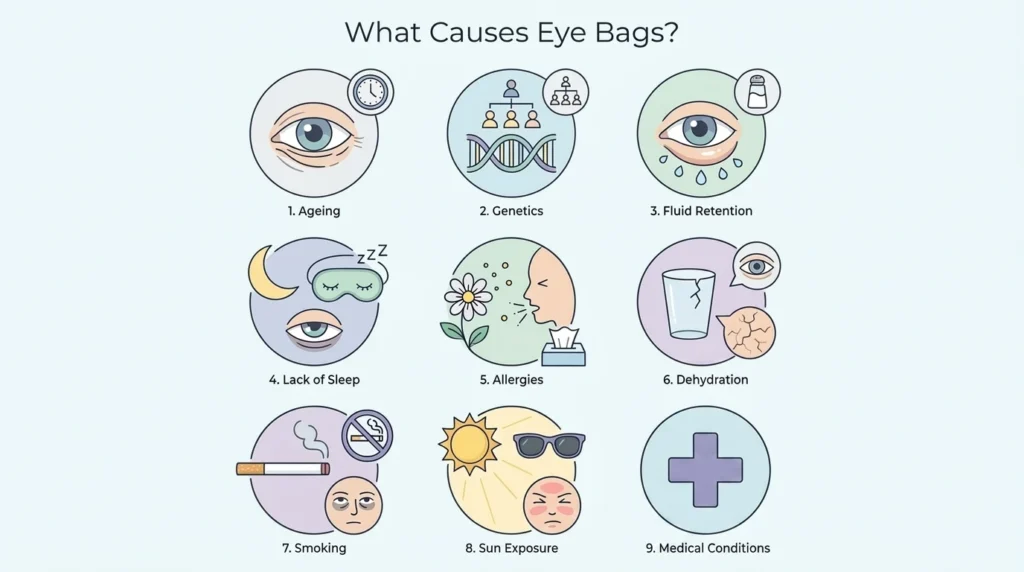
Several factors can contribute to the development of eye bags. In many people, more than one cause is involved.Understanding the causes of eye bags helps determine the most appropriate treatment.
1. Ageing
Ageing is the most common cause of permanent eye bags. As the skin loses elasticity and supporting tissues weaken, fat beneath the eyes becomes more prominent. This process typically becomes noticeable after the age of 40, although it can begin earlier depending on genetics and lifestyle.
2. Genetics
Some individuals inherit naturally prominent fat pads beneath the eyes or thinner skin around the eyelids. If your parents developed eye bags early in life, you may also be more likely to experience them at a younger age.
3. Fluid Retention
Temporary fluid retention is a common reason for morning puffiness. It may occur due to:
- Consuming salty foods
- Hormonal changes
- Sleeping flat
- Crying
- Alcohol consumption
Unlike age-related eye bags, this type of swelling usually improves within a few hours.
4. Lack of Sleep
Poor sleep does not usually cause permanent eye bags, but it can make existing bags appear more prominent. Sleep deprivation slows skin repair and encourages temporary fluid accumulation beneath the eyes.
Many people wonder, “Why do I have bags under my eyes?” In many cases, poor sleep temporarily worsens existing eye bags rather than causing permanent ones.
Most adults should aim for 7–9 hours of quality sleep each night.
5. Allergies
Seasonal allergies and allergic conjunctivitis can cause inflammation around the eyes. Frequent rubbing further irritates the delicate tissues and increases swelling, making eye bags more noticeable.
Managing allergies effectively often reduces under-eye puffiness.
6. Dehydration
When the body becomes dehydrated, it may retain water once fluids are available again. This imbalance can contribute to puffiness around the eyes, especially after waking.
7. Smoking
Smoking damages collagen and elastin, accelerates skin ageing, and reduces blood circulation. These effects weaken the tissues supporting the eyelids, increasing the likelihood of developing eye bags earlier in life.
8. Sun Exposure
Excessive ultraviolet (UV) exposure breaks down collagen fibres and accelerates skin ageing. Over time, this contributes to loose skin and more prominent eye bags.
9. Medical Conditions
Although uncommon, persistent eye bags may be associated with underlying health conditions, including:
- Thyroid eye disease
- Chronic sinus infections
- Kidney disorders
- Dermatitis
- Orbital inflammation
- Severe allergic reactions
If under-eye swelling is accompanied by pain, redness, fever, or changes in vision, prompt medical evaluation is essential.
Who Is Most at Risk of Developing Eye Bags?
Although eye bags can affect anyone, certain factors increase the likelihood of developing them earlier or making them appear more prominent.
| Risk Factor | How It Contributes |
| Ageing | Weakens the tissues supporting the eyelids and allows fat to bulge forward. |
| Family history | Some people naturally inherit prominent under-eye fat pads. |
| Chronic lack of sleep | Increases temporary fluid retention and makes eye bags more noticeable. |
| Smoking | Accelerates collagen loss and premature skin ageing. |
| Excessive alcohol intake | Causes dehydration and poor-quality sleep, worsening puffiness. |
| High-sodium diet | Promotes water retention around the eyes. |
| Seasonal allergies | Causes inflammation and frequent eye rubbing. |
| Excessive sun exposure | Breaks down collagen and elastin, leading to sagging skin. |
Having one or more of these risk factors does not necessarily mean you will develop permanent eye bags, but they can contribute to earlier or more noticeable changes around the eyes.
Also read about Eye Twitching : Causes, Symptoms, Meaning, Treatment & When to Worry
What Symptoms Are Associated with Eye Bags?
Eye bags are generally painless and primarily affect appearance rather than vision.
Common signs include:
- Mild swelling beneath the lower eyelids
- Bulging or protruding fat under the eyes
- Loose or sagging skin
- Fine wrinkles around the lower eyelids
- Puffy appearance or under eye swelling, especially after waking up
- A tired or aged facial appearance
These symptoms are usually symmetrical and develop gradually over time.
When Can Eye Bags Be a Sign of a Medical Condition?
Most eye bags are harmless, but persistent or sudden swelling may indicate an underlying health problem that requires medical attention.
Consult an ophthalmologist if you experience:
- Swelling affecting only one eye
- Sudden or rapidly increasing swelling
- Pain or tenderness around the eyelids
- Redness or warmth
- Fever
- Blurred or double vision
- Difficulty moving the eye
- Bulging of the eyeball
- Persistent swelling that does not improve
These symptoms may be associated with conditions such as:
- Orbital cellulitis
- Thyroid eye disease
- Kidney disorders
- Severe allergic reactions
- Orbital inflammation
- Rare eyelid or orbital tumours
Early diagnosis is important to prevent complications and preserve eye health.
How Are Eye Bags Diagnosed?
In most cases, eye bags can be diagnosed during a comprehensive eye examination. Your ophthalmologist will evaluate whether the swelling is due to ageing, allergies, fluid retention, or another underlying condition.
During your consultation, your doctor may ask about:
- When the swelling first appeared
- Whether it is worse in the morning
- Recent allergies or infections
- Family history
- Sleep patterns
- Diet and lifestyle habits
- Current medications
- Smoking or alcohol use
The examination may include:
- Assessment of eyelid position
- Skin elasticity evaluation
- Examination of fat protrusion
- Eye movement assessment
- Vision testing
- Tear film evaluation
- Examination for thyroid-related eye disease
- Assessment for eyelid inflammation or infection
Blood tests or imaging studies are only required if an underlying medical condition is suspected.
Can Eye Bags Go Away Naturally?
Whether eye bags improve naturally depends on their underlying cause. Many people search for how to get rid of eye bags naturally, but the answer depends on whether the swelling is temporary or caused by ageing.
Temporary Eye Bags
Eye bags caused by fluid retention, allergies, crying, dehydration, or lack of sleep often improve once the trigger is addressed.
Examples include:
- Sleeping well after a few nights of poor rest
- Drinking adequate water
- Reducing salt intake
- Managing allergies
- Applying a cold compress
Permanent Eye Bags
Eye bags caused by ageing or genetics usually do not disappear completely without professional treatment because they result from structural changes in the eyelids.
Understanding the difference helps you choose realistic treatment options.
How Doctors Decide the Right Eye Bags Treatment
Treatment depends on the underlying cause rather than appearance alone.
| Cause | Recommended Treatment |
| Fluid retention | Cold compress, reduced salt intake, hydration |
| Poor sleep | Improved sleep hygiene |
| Allergies | Allergy management and prescribed medications |
| Mild skin laxity | Skin-tightening procedures or topical treatments |
| Tear trough hollowing | Dermal fillers (selected patients) |
| Fat prolapse due to ageing | Blepharoplasty |
| Underlying medical condition | Treat the underlying disease first |
This personalised approach ensures that treatment addresses the root cause instead of simply masking symptoms.
Home Remedies for Eye Bags That May Help Reduce Puffiness
While home remedies for eye bags cannot remove permanent eye bags caused by ageing, they can reduce temporary puffiness and improve the overall appearance of the under-eye area.
Apply a Cold Compress
Cold temperatures temporarily constrict blood vessels, helping reduce swelling.
Suitable options include:
- Chilled washcloth
- Gel eye mask
- Wrapped ice pack
- Refrigerated spoons
Apply for 10–15 minutes.
Get Enough Sleep
Adults should aim for 7–9 hours of quality sleep each night.
Sleeping with your head slightly elevated may help reduce fluid accumulation beneath the eyes.
Reduce Salt Intake
Excess sodium encourages the body to retain water, increasing morning puffiness.
Try limiting:
- Packaged snacks
- Processed meats
- Instant noodles
- Fast food
- Pickled foods
Stay Well Hydrated
Adequate hydration helps maintain normal fluid balance throughout the body and may reduce temporary under-eye puffiness.
Manage Allergies
If allergies are contributing to swelling:
- Avoid known triggers
- Use prescribed antihistamines if recommended
- Avoid rubbing your eyes
- Follow your doctor’s advice for long-term allergy control
Protect Your Skin from Sun Damage
Daily sunscreen and UV-protective sunglasses help slow collagen loss and premature skin ageing.
Avoid Smoking
Smoking accelerates skin ageing and weakens the tissues supporting the eyelids. Quitting smoking benefits both your overall health and the appearance of your skin.
Myths vs Facts About Eye Bags
Many misconceptions exist about eye bags. Understanding the facts can help you choose the right treatment.
| Myth | Fact |
| Eye bags are always caused by lack of sleep. | Ageing and genetics are the most common causes of permanent eye bags. |
| Eye creams can remove eye bags permanently. | Most creams only provide temporary improvement in puffiness or hydration. |
| Cucumbers permanently eliminate eye bags. | They provide temporary cooling but do not correct structural changes. |
| Only older adults develop eye bags. | Genetics, allergies, and lifestyle factors can cause eye bags in younger individuals. |
| Eye bags always require surgery. | Mild cases often improve with lifestyle changes or non-surgical treatments. |
Natural Remedies: Do They Really Work?
Many home remedies are popular on social media, but scientific evidence varies.
| Remedy | Does It Help? |
| Cold compress | ✅ Effective for temporary swelling |
| Cucumber slices | ✅ Temporary cooling effect |
| Chilled tea bags | ✅ Mild reduction in swelling due to caffeine |
| Aloe vera | ⚠️ Moisturises skin but does not remove eye bags |
| Coffee eye creams | ✅ May temporarily reduce puffiness |
| Facial massage | ⚠️ May improve drainage but does not correct fat bulging |
These remedies may improve temporary puffiness but cannot reverse age-related structural changes.
Also read: Conjunctivitis (Pink Eye): Meaning, Symptoms, Diagnosis, Treatment
Medical Treatments for Eye Bags
If lifestyle changes and home remedies do not improve persistent eye bags, an ophthalmologist may recommend under eye bags treatment based on the underlying cause, severity, skin quality, and your aesthetic goals.
Not everyone requires surgery. Mild to moderate eye bags often respond well to minimally invasive procedures, while significant fat bulging and loose skin may require blepharoplasty.
1. Topical Eye Creams
Eye creams cannot remove fat deposits or tighten significantly loose skin, but they may improve mild puffiness and skin texture.
Look for ingredients such as:
- Caffeine – Helps reduce temporary swelling by constricting blood vessels.
- Retinol – Encourages collagen production and improves fine lines.
- Peptides – Support skin repair and firmness.
- Hyaluronic Acid – Improves hydration and temporarily plumps the skin.
- Vitamin C – Brightens the skin and provides antioxidant protection.
These products work best for early signs of ageing and temporary puffiness but should not be considered a permanent eye bag removal solution.
2. Dermal Fillers
Some people appear to have eye bags because of a hollow area between the lower eyelid and cheek, known as the tear trough.
In carefully selected patients, hyaluronic acid fillers can smooth this transition and reduce the appearance of under-eye bags.
Best suited for:
- Mild hollowness
- Younger patients
- Good skin elasticity
Results usually last 6–18 months, depending on the product used and individual factors.
3. Laser Skin Resurfacing
Laser treatments stimulate collagen production, improve skin texture, and tighten mild skin laxity around the lower eyelids.
They are most effective for:
- Fine wrinkles
- Mild sagging
- Early skin ageing
Laser treatments cannot remove large fat pads but may enhance overall skin quality.
4. Radiofrequency Skin Tightening
Radiofrequency technology gently heats the deeper layers of the skin to stimulate collagen remodelling.
Benefits include:
- Improved skin firmness
- Reduced fine lines
- Minimal downtime
- Gradual improvement over several months
5. Chemical Peels
Superficial chemical peels improve:
- Skin texture
- Pigmentation
- Fine wrinkles
However, they have limited benefit for structural eye bags caused by fat protrusion.
6. Prescription Treatment
If allergies, dermatitis, or inflammatory conditions are responsible for under-eye swelling, your ophthalmologist may prescribe medications to control the underlying condition before considering cosmetic treatment.
Blepharoplasty: The Most Effective Long-Term Treatment for Eye Bags
When eye bags are caused by ageing, weakened eyelid tissues, and protruding fat pads, lower eyelid blepharoplasty (eye bag surgery) remains the gold standard treatment.
Blepharoplasty is a specialised eyelid surgery that removes or repositions excess fat while tightening loose skin and supporting tissues. Unlike creams or temporary treatments, it addresses the structural cause of persistent eye bags.
Depending on the patient’s needs, the procedure may involve:
- Removing excess fat
- Repositioning fat to create a smoother contour
- Tightening the lower eyelid muscles
- Removing excess skin
- Improving eyelid support
The goal is to achieve a natural, refreshed appearance without changing the shape of the eyes.
Who Is a Good Candidate for Blepharoplasty?
You may benefit from blepharoplasty if you:
- Have persistent eye bags that do not improve with lifestyle changes
- Notice bulging fat beneath the lower eyelids
- Have loose or sagging lower eyelid skin
- Are in good general health
- Have realistic expectations about the outcome
Your ophthalmologist will perform a detailed eye examination to determine whether surgery is the most appropriate treatment.
Recovery After Eye Bag Surgery
Recovery is generally straightforward, although healing varies between individuals. Eye bag surgery recovery usually takes one to two weeks for most routine activities.
Immediately after surgery, you may experience:
- Mild swelling
- Bruising
- Tightness around the eyelids
- Temporary sensitivity to light
- Mild discomfort
Most patients return to routine activities within 7–10 days, while complete healing continues over several weeks.
Your surgeon may recommend:
- Cold compresses
- Sleeping with your head elevated
- Prescribed eye drops or ointments
- Avoiding heavy lifting
- Wearing sunglasses outdoors
- Avoiding eye rubbing during recovery
Following post-operative instructions carefully helps ensure the best possible outcome.
Comparison of Eye Bag Treatments
| Treatment | Best For | Downtime | Results |
| Cold Compress | Temporary puffiness | None | Temporary |
| Eye Creams | Mild puffiness and fine lines | None | Temporary |
| Lifestyle Changes | Fluid retention | None | Variable |
| Dermal Fillers | Tear trough hollowness | 1–2 days | 6–18 months |
| Laser Resurfacing | Mild skin laxity | Few days | Long-term improvement |
| Radiofrequency | Mild skin tightening | Minimal | Gradual improvement |
| Blepharoplasty | Permanent age-related eye bags | 1–2 weeks | Long-lasting |
Can Eye Bags Be Prevented?
While ageing and genetics cannot be prevented, adopting healthy habits may delay the appearance of eye bags and reduce temporary swelling.
Practical Prevention Tips
✔ Sleep for 7–9 hours each night.
✔ Sleep with your head slightly elevated.
✔ Limit salt-rich processed foods.
✔ Stay well hydrated.
✔ Protect your skin with sunscreen and UV-blocking sunglasses.
✔ Avoid smoking.
✔ Limit alcohol intake.
✔ Manage allergies promptly.
✔ Avoid rubbing your eyes.
✔ Follow the 20-20-20 rule during prolonged screen use to reduce eye strain.
Although these measures cannot completely prevent age-related eye bags, they support healthier skin and reduce temporary puffiness.
When Should You See an Eye Specialist?
Most eye bags are harmless. However, professional evaluation is recommended if you notice:
- Sudden swelling
- Swelling affecting only one eye
- Persistent swelling despite home care
- Pain or tenderness
- Redness
- Fever
- Double vision
- Blurred vision
- Difficulty moving the eye
These symptoms may indicate an underlying condition that requires prompt medical attention.
Why Choose Innocent Hearts Eye Centre?
At Innocent Hearts Eye Centre, our experienced ophthalmologists provide comprehensive evaluation and personalised treatment for eyelid concerns, including persistent eye bags.
Our approach includes:
- Detailed eye examination
- Identification of the underlying cause
- Individualised treatment planning
- Advanced diagnostic facilities
- Expertise in eyelid and oculoplastic procedures
- Evidence-based patient care
Whether your concern is cosmetic or related to an underlying eye condition, our team is committed to helping you achieve healthier eyes and improved confidence.
Conclusion
Eye bags are a common concern that often develop due to ageing, genetics, fluid retention, allergies, or lifestyle factors. While temporary puffiness may improve with adequate sleep, hydration, and simple home remedies, persistent eye bags caused by weakened eyelid tissues usually require professional evaluation.
Understanding the underlying cause is the key to choosing the best treatment for eye bags, whether through lifestyle changes, non-surgical procedures, or blepharoplasty. Modern management options range from lifestyle modifications and minimally invasive procedures to blepharoplasty, which remains the most effective long-term solution for structural eye bags.
If under-eye swelling is affecting your appearance, causing discomfort, or accompanied by pain or vision changes, consult an experienced ophthalmologist for a comprehensive assessment. At Innocent Hearts Eye Centre, we are committed to providing personalised, evidence-based eye care to help you achieve healthy eyes and lasting confidence.
Take the Next Step
At Innocent Hearts Eye Centre, you can get a detailed assessment and understand which treatment option is suitable for you, based on your eye condition, not assumptions.
📞 Call us at +91-98759 69672
🌐 Visit https://innocentheartseyecentre.com
📍 Book an appointment at Punjab’s First ZEISS Refractive Suite
Google Map
See the world sharp, clear, and glasses-free—without second-guessing your decision.
Real Patients, Real Reviews
Also Read
- Why is a Regular Eye Check-up Important?
- Understanding Smile Pro Eye Surgery
- Comparing Smile Pro Eye Surgery to Other LASIK Procedures
- 10 Natural Ways to Improve Your Vision – Bye Bye Glasses!
- Understanding Presbyopia: Causes, Symptoms, Diagnosis, and Advanced Treatments
- PRESBYOND Laser Blended Vision At Innocent Hearts Eye Centre
- Punjab’s First ZEISS Refractive Suite Now at Innocent Hearts Eye Hospital, Jalandhar
- What to Eat After Cataract Surgery?
- What Happens When Cataract Matures?
- मोतियाबिंद सर्जरी का सही समय: लक्षण, मिथक और विशेषज्ञ सलाह
Frequently Asked Questions (FAQs) – Eye Bags
Not always. Eye bags caused by fluid retention, allergies, or lack of sleep are often temporary. Those caused by ageing or genetics are usually more persistent.
Staying hydrated may help reduce puffiness associated with dehydration, but it is unlikely to eliminate permanent eye bags caused by ageing.
Poor sleep can worsen puffiness and make existing eye bags more noticeable. However, it is not usually the sole cause of permanent eye bags.
Yes. Genetics plays an important role in facial structure and can increase the likelihood of developing eye bags at a younger age.
Most eye creams improve skin hydration and may temporarily reduce puffiness, but they cannot remove fat deposits or tighten significantly loose skin.