Most people visit an eye doctor only when blurry vision, headaches, or difficulty reading start affecting daily life. “Thoda blur toh normal hai” or “screen zyada use karne ki wajah se hoga” are common things many families across Jalandhar and India often ignore. However, several serious eye diseases can develop silently in the early stages without noticeable symptoms.
With increasing screen time among students, working professionals, drivers, and elderly individuals, cases of eye strain, dry eyes, headaches, and blurred vision are becoming more common. A regular eye check-up is not just about getting glasses updated, it helps detect conditions like glaucoma, cataracts, retinal disorders, diabetes, and high blood pressure early before they begin affecting long-term vision and overall health.
At Innocent Hearts Eye Centre, regular eye screenings help individuals of all age groups identify eye conditions at an early, treatable stage and maintain healthy vision.
Why Eye Problems Are Increasing Today
In today’s digital lifestyle, eye-related problems are increasing rapidly across India due to excessive screen exposure, rising diabetes cases, pollution, and long working hours. In Punjab, many people delay routine eye check-ups until symptoms begin affecting daily activities such as reading, driving, studying, or using mobile devices, which can increase the risk of avoidable vision complications.
Why Regular Eye Exams Matter
Your eyes are one of the most sensitive organs in the body. Even small changes in eye pressure, retina health, or optic nerve function can affect vision permanently if ignored.
A routine eye check-up helps in:
- Detecting eye diseases early
- Monitoring changes in vision
- Updating glasses or contact lens prescriptions
- Preventing long-term complications
- Identifying health conditions linked to the eyes
- Protecting children’s learning and development
- Preserving vision as you age
According to eye specialists, many eye conditions such as glaucoma and diabetic retinopathy may not show warning signs initially. Regular exams allow doctors to identify these issues before vision loss occurs.
Eye Diseases That Can Be Detected Early
1. Glaucoma
Glaucoma is known as the “silent thief of sight.” It slowly damages the optic nerve and may not show symptoms until vision loss becomes permanent.
Regular eye pressure testing and optic nerve evaluation can help diagnose glaucoma early and prevent blindness.
2. Cataracts
Cataracts cause clouding of the eye lens, leading to blurry vision, glare sensitivity, and difficulty seeing at night. Early diagnosis helps manage the condition before it severely affects daily activities.
3. Diabetic Retinopathy
People with diabetes are at higher risk of retinal damage. In many cases, patients may not notice symptoms until the condition becomes advanced.
Routine retinal examinations help detect diabetic eye damage early and reduce the risk of permanent vision loss.
4. Macular Degeneration
Age-related macular degeneration affects central vision and can interfere with reading, driving, and facial recognition. Early detection improves treatment outcomes.
5. Refractive Errors
Conditions like myopia (short-sightedness), hyperopia (long-sightedness), astigmatism, and presbyopia can worsen gradually. Eye exams ensure accurate vision correction and reduce eye strain.
What Happens If You Skip Regular Eye Check-ups?
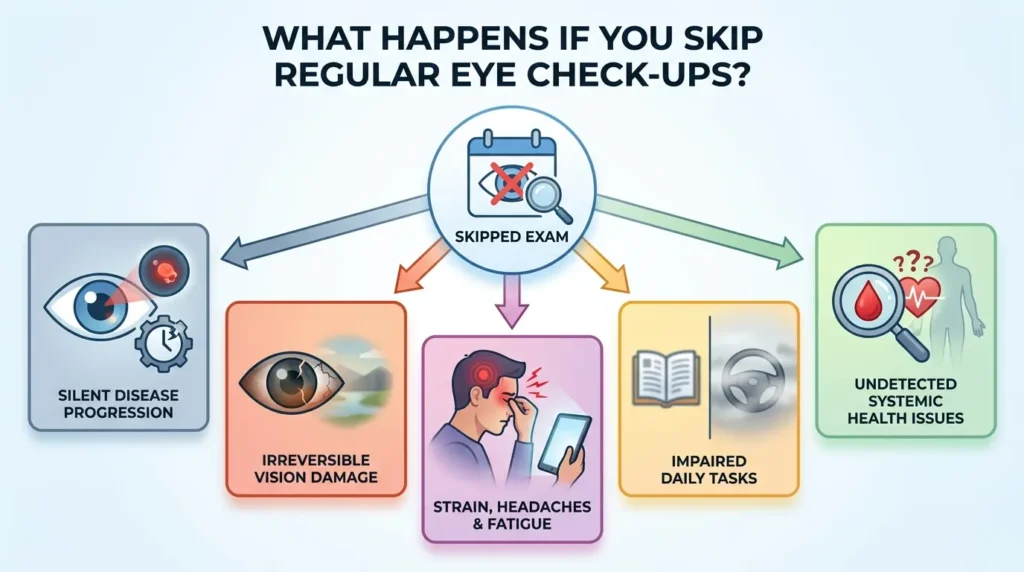
Ignoring routine eye examinations can lead to serious consequences. Many people assume their eyes are healthy simply because they can still see clearly. Unfortunately, this is not always true.
Here’s what can happen if regular eye exams are missed:
Delayed Diagnosis of Eye Diseases
Many eye disorders progress silently. Without routine screening, diseases may only be detected after irreversible damage occurs.
Permanent Vision Loss
Conditions like glaucoma, retinal detachment, and diabetic retinopathy can permanently damage vision if left untreated. Early treatment significantly lowers this risk.
Increased Eye Strain and Headaches
Uncorrected vision problems often lead to headaches, fatigue, poor concentration, and digital eye strain, especially among students and working professionals.
Difficulty in Daily Activities
Poor vision can affect reading, driving, work performance, sports, and even basic tasks like using mobile phones or recognizing faces.
Missed Signs of Other Health Problems
Eye doctors can sometimes detect early signs of diabetes, hypertension, autoimmune diseases, and neurological conditions during a routine eye examination.
Importance of Regular Eye Check-ups for Children
Children may not always realize they have vision problems. Poor eyesight can affect:
- Academic performance
- Reading ability
- Concentration
- Sports participation
- Confidence and social development
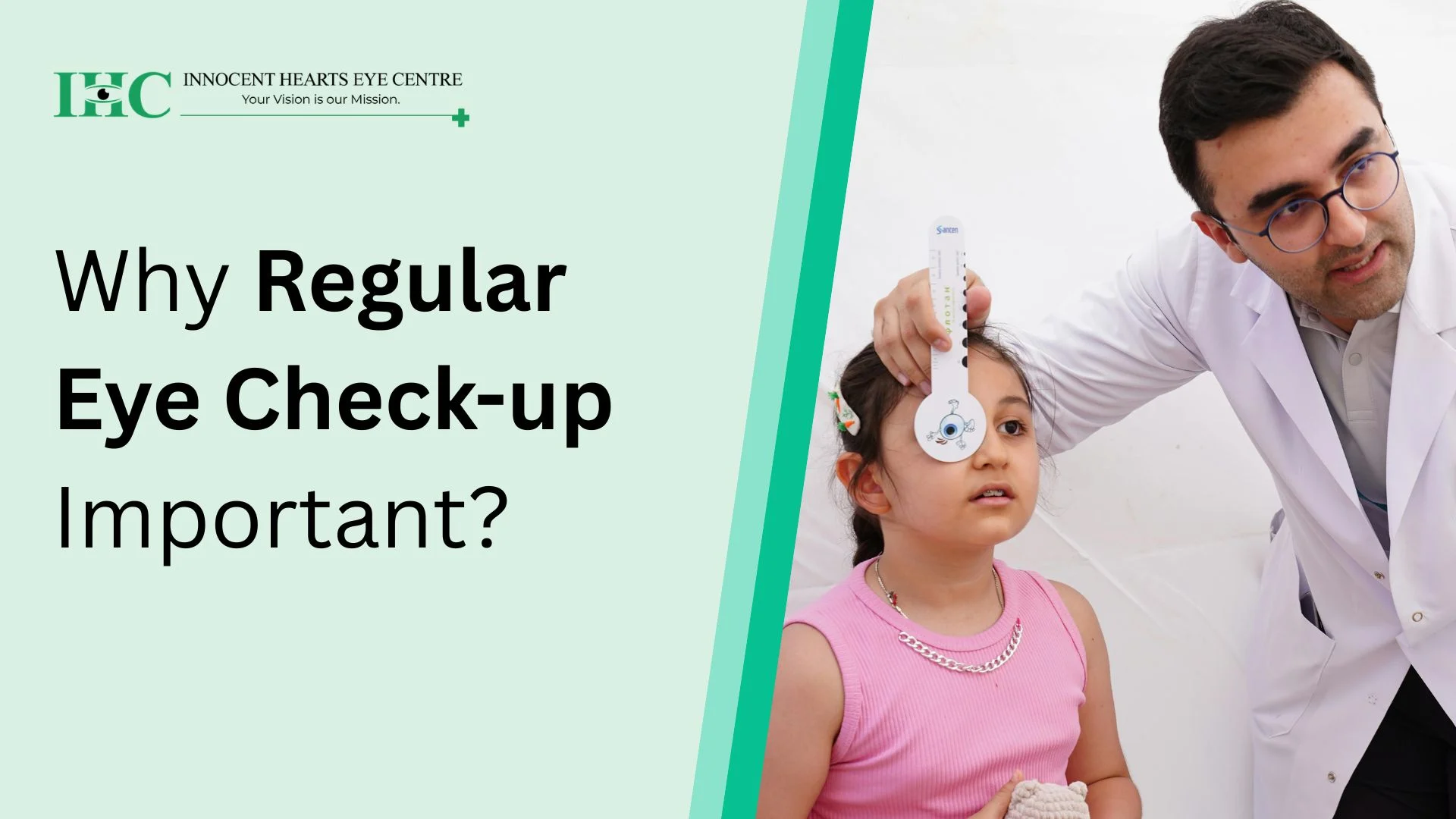
Many parents assume their child is distracted or struggling academically, while the actual issue may be undiagnosed vision problems. Early eye examinations can help children perform better in school, improve concentration, and support healthy visual development during growing years.
A child struggling in school may actually have undiagnosed vision issues. Regular pediatric eye exams help identify problems early and support healthy visual development. Experts recommend eye screenings before school age and regular follow-ups during school years.
Importance of Regular Eye Check-ups for Adults
Adults often spend long hours on digital screens, increasing the risk of:
- Digital eye strain
- Dry eyes
- Blurred vision
- Headaches
- Fatigue
Routine eye exams help monitor vision changes and detect age-related eye conditions before they progress.
For individuals over 40, annual eye exams become even more important due to the increased risk of glaucoma, cataracts, and retinal diseases.
How Often Should You Get an Eye Check-up?
Eye specialists generally recommend:
| Age Group | Recommended Eye Exam Frequency |
| Children | Before school and every 1–2 years |
| Adults (18–40 years) | Every 1–2 years |
| Adults above 40 | Once every year |
| Diabetic patients | Annual retinal check-up |
| Contact lens users | Annual eye exam |
| Senior citizens | Annual comprehensive eye exam |
People with diabetes, high blood pressure, family history of glaucoma, or existing eye conditions may require more frequent monitoring.
What Happens During a Comprehensive Eye Examination?
A complete eye check-up may include:
- Vision testing
- Eye pressure measurement
- Retina examination
- Optic nerve evaluation
- Eye muscle coordination assessment
- Cornea and lens examination
- Prescription testing for glasses or contact lenses
Some exams may also involve pupil dilation to allow a detailed view of the retina and optic nerve.
Signs You Should Never Ignore
Book an eye examination immediately if you experience:
- Sudden blurry vision
- Eye pain
- Frequent headaches
- Double vision
- Flashes or floaters
- Redness or irritation
- Difficulty seeing at night
- Sensitivity to light
- Sudden loss of vision
Ignoring these symptoms can increase the risk of complications and permanent damage.
Tips to Maintain Healthy Eyes
Along with regular eye check-ups, healthy habits can protect your vision:
- Follow the 20-20-20 screen rule
- Wear UV-protective sunglasses
- Eat leafy greens and vitamin-rich foods
- Stay hydrated
- Control diabetes and blood pressure
- Avoid smoking
- Get adequate sleep
- Use proper lighting while reading
Also read: How to Improve Your Vision in 7 Days
What Eye Specialists Recommend
Eye specialists at Innocent Hearts Eye Centre recommend routine eye examinations even when vision appears normal, as many serious eye diseases such as glaucoma, diabetic retinopathy, and retinal disorders may develop silently without early symptoms. Early diagnosis plays a major role in protecting long-term vision and preventing complications.
Final Thoughts
Good vision should never be taken for granted. Regular eye examinations are one of the most effective ways to protect your vision and identify eye problems before they become serious. Whether it is a child facing difficulty in school, an adult experiencing digital eye strain, or an elderly individual noticing age-related vision changes, timely eye care can make a significant difference.
At Innocent Hearts Eye Centre, experienced eye specialists provide comprehensive eye check-ups, preventive screenings, and advanced eye care services to help patients maintain healthy vision and long-term eye wellness.
About Innocent Hearts Eye Centre
At Innocent Hearts Eye Centre (Jalandhar), the focus is on:
- Accurate diagnosis
- Honest, clear guidance
- Advanced vision correction treatments
Every patient is evaluated carefully so they can make informed decisions about their eye health.
Take the Next Step
If you are considering removing your specs permanently, the first step is a proper eye evaluation.
At Innocent Hearts Eye Centre, you can get a detailed assessment and understand which treatment option is suitable for you, based on your eye condition, not assumptions.
📞 Call us at +91-98759 69672
🌐 Visit https://innocentheartseyecentre.com
📍 Book an appointment at Punjab’s First ZEISS Refractive Suite
Google Map
See the world sharp, clear, and glasses-free—without second-guessing your decision.
Real Patients, Real Reviews
Also Read
- Understanding Smile Pro Eye Surgery
- Comparing Smile Pro Eye Surgery to Other LASIK Procedures
- 10 Natural Ways to Improve Your Vision – Bye Bye Glasses!
- Understanding Presbyopia: Causes, Symptoms, Diagnosis, and Advanced Treatments
- PRESBYOND Laser Blended Vision At Innocent Hearts Eye Centre
- Punjab’s First ZEISS Refractive Suite Now at Innocent Hearts Eye Hospital, Jalandhar
- What to Eat After Cataract Surgery?
- What Happens When Cataract Matures?
- मोतियाबिंद सर्जरी का सही समय: लक्षण, मिथक और विशेषज्ञ सलाह
Frequently Asked Questions (FAQs) – Remove Specs Permanently Naturally
Yes. Early detection and timely treatment of eye conditions like glaucoma, cataracts, and retinal disorders can significantly reduce the risk of permanent vision loss.
Yes. Vision can change over time, and regular eye examinations help ensure your prescription remains accurate while also checking for underlying eye conditions.
Absolutely. Older adults are at a higher risk of cataracts, glaucoma, age-related macular degeneration, and diabetic eye disease, making routine eye exams essential.
Yes. Diabetes can damage the blood vessels in the retina and increase the risk of diabetic retinopathy, blurred vision, and vision loss if not monitored regularly.
A comprehensive eye check-up may include vision testing, eye pressure measurement, retina examination, prescription testing, and evaluation of overall eye health.