Your eyelid suddenly starts jumping on its own. You didn’t ask it to. You can’t make it stop. Sound familiar?
Eye twitching is an involuntary spasm of the eyelid muscles. Common causes include stress, lack of sleep, excess caffeine (chai or coffee), digital eye strain, dry eyes, and nutritional deficiencies. Most cases are harmless and temporary. However, twitching lasting longer than 2–3 weeks, spreading to the face, or occurring with vision changes should be evaluated by an eye specialist. But in rare cases, it signals something that needs medical attention. Read on to find out the difference
In India, we often call it Aankh Fadakna(Hindi) or Akkh Da Fadakna (Punjabi). While many people immediately think of “good luck” or “bad luck,” there is usually a very simple medical reason behind it.
Eye twitching (medically known as Myokymia) is a common occurrence that affects almost everyone at some point. But when does a simple “eye jump” become a reason for concern?
In this guide, we will explore the eyes twitching reason, the difference between myths and facts, and how to find relief.
What You’ll Learn in This Article
By the time you finish reading, you’ll know:
- Why your eye is twitching and what’s most likely causing it
- When it’s harmless and when it needs professional evaluation
- What deficiency could be behind it and how to check
- How to stop it using simple, evidence-based methods
- The truth behind left eye and right eye twitching beliefs in women and men
- When to visit an eye specialist and what to expect when you do
What Is Eye Twitching?
Eye twitching medically called myokymia or blepharospasm depending on severity is an involuntary, repetitive spasm of the muscles around your eye or eyelid. You feel a rhythmic fluttering, usually in the upper or lower lid. Sometimes barely noticeable, sometimes strong enough to force your eye shut.
For most people, it’s harmless and temporary, resolving on its own once the trigger (stress, poor sleep) is gone. In rare cases, it signals an underlying neurological or eye condition that needs treatment. Knowing which is which is what this article covers.
Types of Eye Twitching
Not all eye twitching is the same. Doctors classify it into five main types, each with different causes and implications.
a) Myokymia – The Everyday Twitch
This is the most common type. It affects the eyelid (especially the lower lid) and feels like a slow, wave-like ripple. Most people experience this at some point in their lives. It’s almost always triggered by lifestyle factors and resolves on its own.
Globally, myokymia (common eye twitching) is thought to affect virtually everyone at some point in life. Benign Essential Blepharospasm affects approximately 5 in 100,000 people worldwide
b) Fasciculations – The Quick Flutter
These are tiny, fast muscle spasms, often too small for others to even see. They’re usually harmless and linked to caffeine, alcohol, stress, or physical overexertion.
c) Benign Essential Blepharospasm (BEB)
This is a more serious neurological condition where both eyelids spasm involuntarily and uncontrollably. It’s not just a flutter, it’s strong enough to force the eyes shut for seconds or even minutes. BEB is rare (affecting roughly 5 in 100,000 people) but significantly affects quality of life. It’s more common in women over 50.
d) Hemifacial Spasm
Here, the twitching affects not just the eyelid but the entire one side of the face, the cheek, the corner of the mouth, sometimes the neck. This is a neurological condition, usually caused by a blood vessel pressing on the facial nerve, and always needs medical evaluation.
e) Nystagmus
This is an involuntary, rhythmic movement of the eyeball itself, side to side, up and down, or in circles. This is distinct from eyelid twitching and is more complex to diagnose and treat.
Causes of Eye Twitching
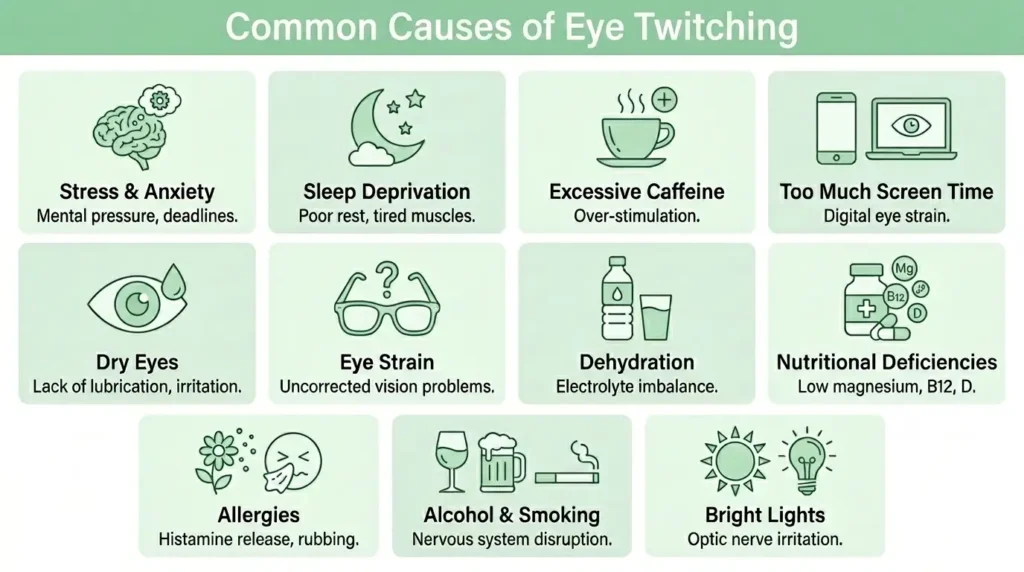
The Most Common Causes (Harmless)
These are the most common reasons behind eye twitching:
- Stress and anxiety — The #1 trigger. When you’re under mental pressure, deadlines, family stress, financial worry, the nervous system becomes overactive, leading to involuntary muscle spasms.
- Sleep deprivation — Even one or two nights of poor sleep can trigger eyelid twitching. Your eyelid muscles, like all muscles, need rest.
- Excessive caffeine — That fourth cup of chai or two strong coffees can over-stimulate the nervous system. Caffeine is a stimulant, and too much of it makes muscles more excitable.
- Too much screen time — Staring at a phone, laptop, or TV screen for hours causes digital eye strain, which fatigues the eye muscles and can trigger twitching.
- Dry eyes — When your eyes aren’t properly lubricated, the muscles around them become irritated and can go into spasm. This is especially common in air-conditioned offices and after prolonged screen use. A 2022 study in the Indian Journal of Ophthalmology found that dry eye disease affects an estimated 18–54% of the Indian population, depending on the region.
- Eye strain — Uncorrected vision problems (needing glasses that you haven’t got yet) force your eyes to work harder. That muscular fatigue can manifest as twitching.
- Dehydration — Not drinking enough water disrupts the electrolyte balance your muscles need to function normally. Even mild dehydration can trigger eye twitching.
- Nutritional deficiencies — Low magnesium, low Vitamin B12, and low Vitamin D are all associated with muscle cramps and spasms, including in the eyelid.
- Allergies — When eyes itch and you rub them, you release histamine, which can make the eyelid muscles twitch.
- Alcohol and smoking — Both disrupt the nervous system and trigger fasciculations.
- Bright lights — Sensitivity to light or exposure to very bright sunlight can irritate the optic nerve and trigger spasms.
Less Common Causes (Need Medical Attention)
In rare cases, persistent eye twitching can be linked to:
- Neurological disorders — Multiple sclerosis (MS), Parkinson’s disease, Tourette syndrome, and Bell’s palsy can all involve eye twitching as a symptom.
- Brain stem lesions or injuries
- Side effects of certain medications — Some anti-epileptic drugs and antipsychotic medications are known to cause eyelid movements.
- Hemifacial spasm — A blood vessel irritating the facial nerve (CN VII).
- Thyroid problems — Hyperthyroidism can cause muscle tremors, including in the eyelids.
Eye Twitching and Screen Time, Stress, Sleep & Caffeine
For most people, the answer to “why is my eye twitching?” is hiding in their daily habits.
- Screen Time: Prolonged screen use reduces blink rate (from ~15 blinks/min to as few as 5–7), causes digital eye strain, and depletes the tear film, all of which trigger eyelid twitching. Known as Computer Vision Syndrome (CVS), it’s increasingly common among students, IT professionals, and remote workers.
“India added over 800 million internet users in the last decade. Screen-related eye strain is now a public health concern.” - Stress: Stress hormones make muscles more excitable and prone to involuntary contractions,including the orbicularis oculi muscle around your eye.
- Sleep: Sleep deprivation keeps the neuromuscular system in an over-fired state. Even 2–3 nights under 6 hours can produce noticeable eyelid twitching.
- Caffeine: Caffeine stimulates peripheral nerves and muscles alongside the brain. More than 3–4 cups of chai or coffee daily significantly raises the risk of myokymia.
What Vitamin Deficiency Causes Eye Twitching?
Can Vitamin Deficiencies Cause Eye Twitching?
Magnesium
Magnesium deficiency is the most directly linked to eye twitching. Magnesium helps muscles relax. Without enough of it, muscles, including those in your eyelid, can go into spasm. Common in people who eat a lot of processed food or drink alcohol regularly or have digestive absorption issues.
Vitamin B12
B12 keeps your nerves working properly. B12 deficiency causes damage to the myelin sheath (the insulation around nerve fibres), disrupting nerve signals. A deficiency can cause twitching, tingling, and spasms across the body, including the eyelids. Especially common in vegetarians and vegans in India.
Vitamin D
Vitamin D deficiency is epidemic in India, paradoxically, despite our abundant sunshine. Deficiency can contribute to generalized muscle twitching.Low levels interfere with how your muscles contract and relax, which can trigger twitching.
Potassium
Low potassium (hypokalemia) disrupts normal muscle cell function and is another trigger for involuntary contractions.
Important: Don’t self-diagnose or self-supplement. A simple blood test can identify these deficiencies accurately. Visit Innocent Hearts Eye Centre or your physician for proper testing before starting supplements.
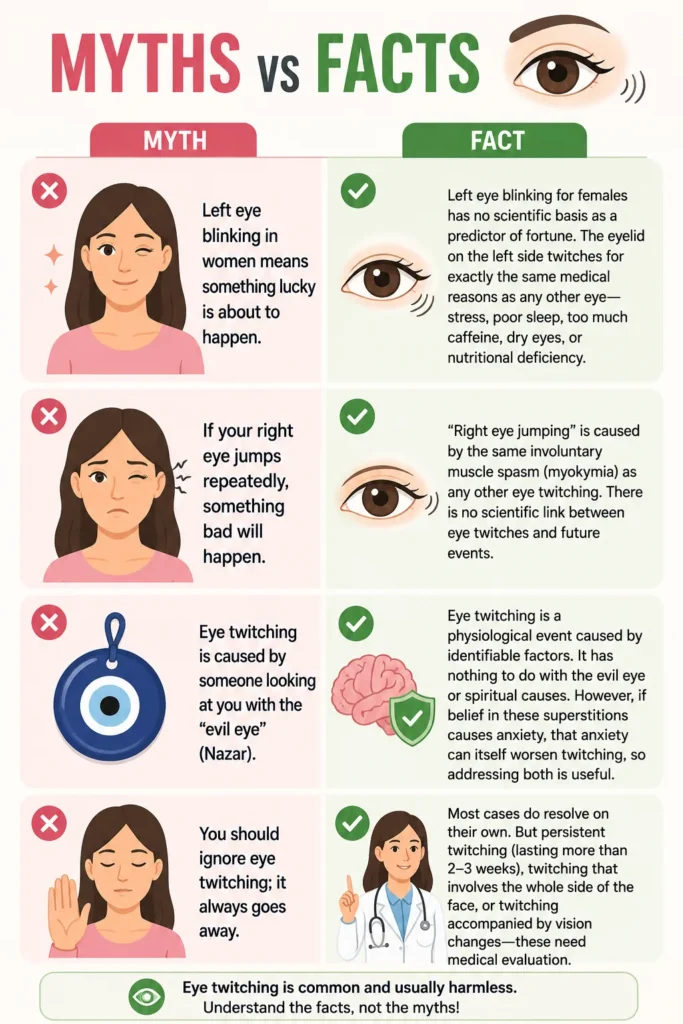
Myths vs Facts
MYTH: Left eye blinking in women means something lucky is about to happen.
FACT: Left eye blinking for females has no scientific basis as a predictor of fortune. The eyelid on the left side twitches for exactly the same medical reasons as any other eye stress, poor sleep, too much caffeine, dry eyes, or nutritional deficiency.
MYTH: If your right eye jumps repeatedly, something bad will happen.
FACT: “Right eye jumping” is caused by the same involuntary muscle spasm (myokymia) as any other eye twitching. There is no scientific link between eye twitches and future events.
MYTH: Eye twitching is caused by someone looking at you with the “evil eye” (Nazar).
FACT: Eye twitching is a physiological event caused by identifiable factors. It has nothing to do with the evil eye or spiritual causes. However, if belief in these superstitions causes anxiety, that anxiety can itself worsen twitching, so addressing both is useful.
MYTH: You should ignore eye twitching; it always goes away.
FACT: Most cases do resolve on their own. But persistent twitching (lasting more than 2–3 weeks), twitching that involves the whole side of the face, or twitching accompanied by vision changes, these need medical evaluation.
Symptoms and Warning Signs
What Does Normal Eye Twitching Feel Like?
- A rhythmic, flickering or fluttering sensation in the upper or lower eyelid
- Affects one eye at a time (usually)
- Comes and goes throughout the day
- More noticeable when tired or stressed
- Resolves on its own within hours to a few days
- Doesn’t affect vision
Warning Signs — When the Twitch Isn’t Normal
Seek medical attention if you notice any of the following:
- Twitching that has lasted more than 2–3 weeks continuously
- Both eyes twitching at the same time (raises concern for blepharospasm)
- Spasms strong enough to force the eyelid shut
- Twitching spreading to the cheek, mouth, or other parts of the face (suggests hemifacial spasm)
- Associated visual disturbances — blurred vision, double vision, or vision loss
- Eye redness, discharge, or swelling alongside twitching
- Eyelid drooping (ptosis) on the same side as the twitching
- Headache, facial pain, or numbness accompanying the twitching
- Twitching that starts in childhood and involves multiple body parts (possible tic disorder)
Diagnosis & Tests
At Innocent Hearts Eye Centre, our diagnostic approach for persistent eye twitching includes:
Step 1: Clinical Examination
Dr. Bowry conducts a detailed slit-lamp examination of the eyelids, conjunctiva, and cornea to rule out local eye causes.
Step 2: Vision Assessment
Checking for refractive errors (need for glasses) and assessing eye muscle function.
Step 3: Dry Eye Assessment
Using Schirmer’s test and Tear Breakup Time (TBUT) to assess tear film quality, since dry eye is a common contributor.
Step 4: Neurological Screening
If hemifacial spasm or blepharospasm is suspected, a neurological referral may be required. An MRI of the brain and brainstem can identify nerve compression or other structural causes.
Step 5: Blood Tests (if indicated)
CBC, Vitamin B12, Vitamin D, magnesium, thyroid profile, and electrolytes to identify nutritional or systemic causes.
Treatment Options
Treatment depends entirely on the cause and type of twitching.
For Common Myokymia (Everyday Twitching)
- Lifestyle modification — Better sleep, stress reduction, reduced caffeine, reduced screen time. This resolves the vast majority of cases.
- Artificial tear eye drops — If dry eye is contributing, lubricating drops can significantly reduce twitching frequency.
- Nutritional supplementation — Magnesium, B12, or Vitamin D if deficiency is confirmed by blood tests.
- Rest — Simply getting 7–8 hours of sleep for a few nights often makes twitching disappear entirely.
For Dry Eye-Related Twitching
- Preservative-free lubricating eye drops (used 3–4 times daily)
- Warm compresses and eyelid hygiene
- Omega-3 fatty acid supplementation
- In more severe cases, prescription anti-inflammatory eye drops
For Allergic Twitching
- Antihistamine eye drops
- Cold compresses
- Avoiding the allergen trigger (dust, pollen, pet dander)
- Oral antihistamines if systemic allergy symptoms are present
For Benign Essential Blepharospasm
Botulinum Toxin (Botox) injections are the gold-standard treatment. Small, carefully placed injections into the eyelid muscles temporarily paralyse the overactive muscles, providing relief for 3–5 months at a time. This is a safe, well-established, and effective procedure performed in our clinic.
For Hemifacial Spasm
- Botox injections provide symptomatic relief in most cases.
- Microvascular decompression surgery is the only curative treatment, a neurosurgical procedure to relieve the blood vessel compressing the facial nerve. Reserved for severe, medically refractory cases.
For Nystagmus
Treatment depends on the underlying cause and may involve glasses, contact lenses, prism correction, medications, or surgery.
Home Remedies and Prevention Tips
These are evidence-based self-care strategies not folk remedies. They’re genuinely effective for the most common type of eye twitching.
1. Prioritise Sleep
Aim for 7–8 hours of uninterrupted sleep. This alone resolves most cases of myokymia within 48–72 hours. Consistent sleep schedule matters more than duration alone.
2. Reduce Caffeine
Cut back on chai, coffee, cold drinks, and energy drinks, especially after 2pm. If you’re having 4–6 cups a day, try halving that for a week and see if the twitching improves.
3. Follow the 20-20-20 Rule
Every 20 minutes of screen time, look at something 20 feet away for at least 20 seconds. This rests the eye muscles, increases your blink rate, and reduces digital eye strain significantly.
4. Use Lubricating Eye Drops
Over-the-counter preservative-free artificial tears (like Systane Ultra, Refresh, or equivalent brands) can lubricate dry eyes and reduce irritation-driven twitching. Use 3–4 times a day when doing extended screen work.
5. Warm Compress
Applying a warm, damp cloth over closed eyelids for 5–10 minutes relaxes the eyelid muscles and can provide immediate relief from a twitching episode. This also helps with meibomian gland dysfunction and dry eye.
6. Stay Hydrated
Drink at least 8–10 glasses of water daily. Electrolyte imbalances from dehydration directly affect muscle function.
7. Manage Stress
Regular exercise, pranayama (breathing exercises), yoga, adequate rest, and mindfulness practices all reduce baseline nervous system activity and make twitching less likely.
8. Reduce Alcohol and Quit Smoking
Both are known triggers. Reducing or eliminating these has documented benefits for myokymia.
9. Eat a Balanced Diet
Include magnesium-rich foods (spinach, almonds, pumpkin seeds, banana, dark chocolate), B12 sources (dairy, eggs, fortified foods or supplements if vegetarian/vegan), and Vitamin D through sunlight exposure or supplementation.
10. Reduce Screen Brightness at Night
Use night mode or blue-light filters after 9pm. Bright screens at night also disrupt sleep quality, indirectly worsening twitching.
When to See an Eye Specialist
Don’t wait if:
- Your eye has been twitching for more than 2–3 weeks and home remedies haven’t helped
- The twitching is getting more frequent or intense over time
- Both eyelids are twitching at the same time
- The twitching is strong enough to close your eye
- Twitching has spread to your cheek or mouth
- You have any vision changes, drooping eyelid, or facial weakness alongside the twitching
- A child’s eye has been twitching persistently (needs urgent evaluation for tics or refractive errors)
- You’re elderly and have new-onset persistent twitching
- You have a history of neurological conditions
This article is for general informational purposes only. It is not a substitute for professional medical advice, diagnosis, or treatment. Always consult a qualified eye specialist for any persistent or concerning symptoms.
About Innocent Hearts Eye Centre
At Innocent Hearts Eye Centre (Jalandhar), the focus is on:
- Accurate diagnosis
- Honest, clear guidance
- Advanced vision correction treatments
Every patient is evaluated carefully so they can make informed decisions about their eye health.
Take the Next Step
If you are considering removing your specs permanently, the first step is a proper eye evaluation.
At Innocent Hearts Eye Centre, you can get a detailed assessment and understand which treatment option is suitable for you, based on your eye condition, not assumptions.
📞 Call us at +91-98759 69672
🌐 Visit https://innocentheartseyecentre.com
📍 Book an appointment at Punjab’s First ZEISS Refractive Suite
Google Map
See the world sharp, clear, and glasses-free—without second-guessing your decision.
Also Read
- Why is a Regular Eye Check-up Important?
- Understanding Smile Pro Eye Surgery
- Comparing Smile Pro Eye Surgery to Other LASIK Procedures
- 10 Natural Ways to Improve Your Vision – Bye Bye Glasses!
- Understanding Presbyopia: Causes, Symptoms, Diagnosis, and Advanced Treatments
- PRESBYOND Laser Blended Vision At Innocent Hearts Eye Centre
- Punjab’s First ZEISS Refractive Suite Now at Innocent Hearts Eye Hospital, Jalandhar
- What to Eat After Cataract Surgery?
- What Happens When Cataract Matures?
- मोतियाबिंद सर्जरी का सही समय: लक्षण, मिथक और विशेषज्ञ सलाह
Frequently Asked Questions (FAQs) – Remove Specs Permanently Naturally
Sudden eye twitching is usually caused by stress, lack of sleep, too much caffeine, dehydration, or long screen time. In most cases, it is temporary and settles on its own within a few hours or days.
From a medical point of view, left eye blinking in females is commonly linked to stress, tiredness, dry eyes, or eye strain. Cultural beliefs about luck or bad news are not supported by science.
Usually no. Right eye twitching in women is commonly caused by fatigue, stress, screen exposure, or caffeine intake. Medical causes are generally the same regardless of gender.
Most eye twitching is harmless and temporary. However, if the twitching lasts more than 2–3 weeks, spreads to the face, or occurs with blurred vision, drooping eyelids, or facial weakness, you should consult an eye specialist.
Low levels of magnesium, Vitamin B12, and Vitamin D are sometimes linked with eye twitching. A proper medical evaluation and blood tests can help identify any deficiency.