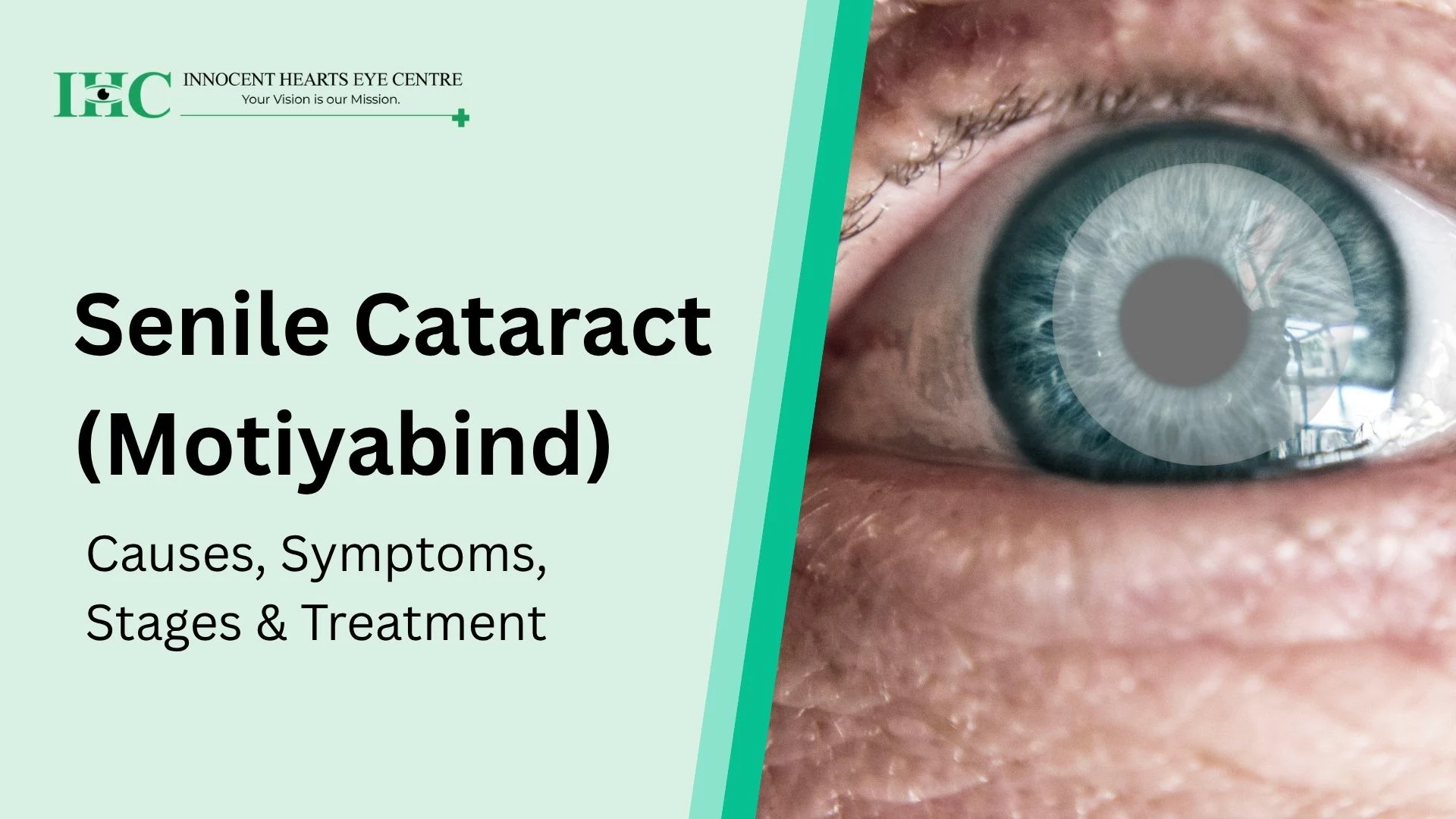
As we age, changes in our eyesight can become more common. One of the most common age-related eye conditions is a senile cataract, also known as age-related cataract or Motiyabind. It develops when the natural lens of the eye gradually becomes cloudy, making it harder for light to reach the retina clearly.
Senile cataracts usually develop slowly, so the early changes may not be noticeable. Over time, however, cloudy vision, glare, difficulty seeing at night, and other vision problems can interfere with everyday activities. Understanding the symptoms, stages, causes, and treatment options can help you seek an eye examination at the right time.
What Is Senile Cataract (Motiyabind)?
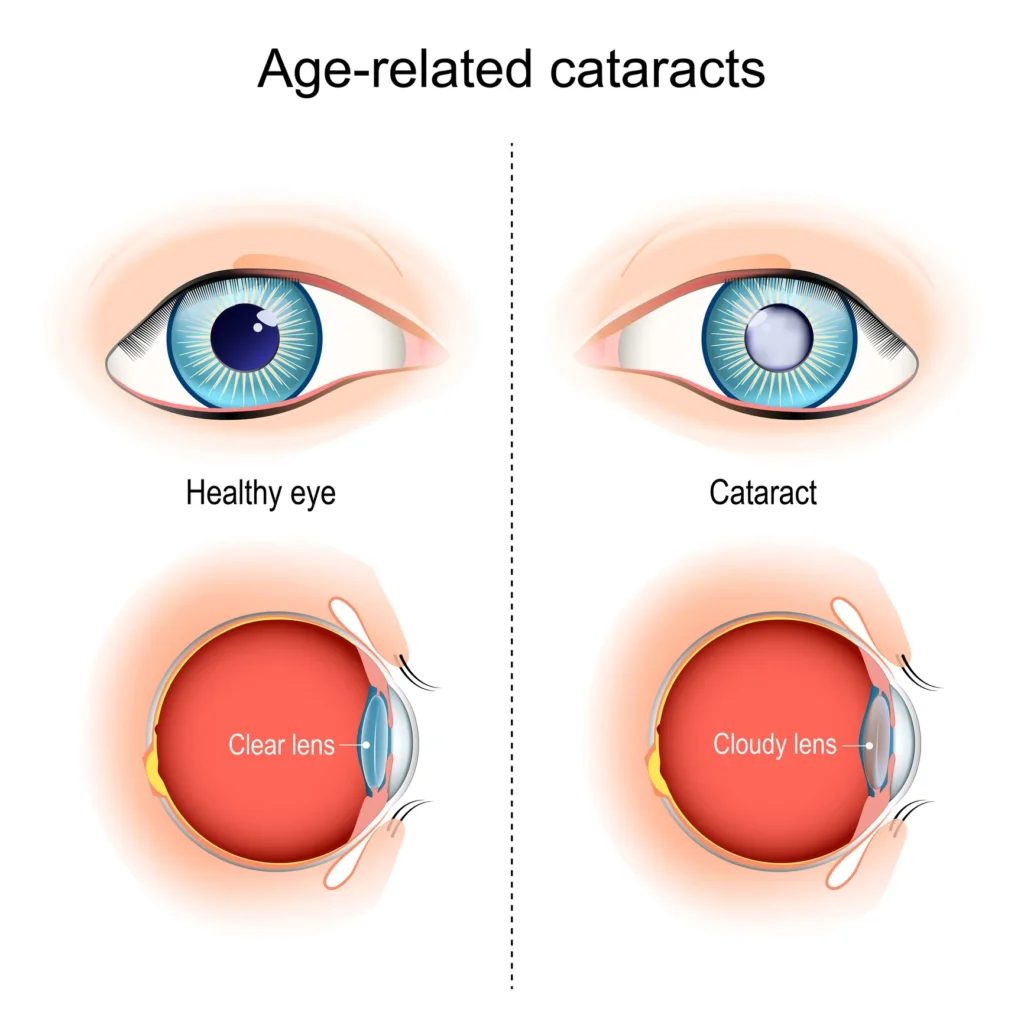
A senile cataract is a clouding of the eye’s natural lens that occurs mainly due to ageing. The lens normally remains clear and helps focus light onto the retina. With age, changes in the proteins and structure of the lens can gradually make it less transparent.
As the cataract progresses, light does not pass through the lens properly. This can result in blurred, cloudy, or hazy vision.
Senile cataracts may develop in one or both eyes, and they do not necessarily progress at the same rate in both eyes. Although cataracts are common in older adults, significant changes in vision should not simply be considered a normal part of ageing. An eye examination can determine whether cataract or another eye condition is responsible.
What Causes Senile Cataract?
Ageing is the main factor associated with senile cataracts. However, certain conditions and lifestyle factors may increase the risk or contribute to earlier development.
These include:
- Diabetes or poorly controlled blood sugar
- Long-term use of steroid medicines
- Prolonged exposure to ultraviolet (UV) radiation
- Smoking
- Excessive alcohol consumption
- Previous eye injury or eye surgery
- Certain medical or eye conditions
Having one or more risk factors does not necessarily mean that a person will develop a cataract, but regular eye examinations become particularly important when these factors are present.

Symptoms of Senile Cataract
Senile cataracts often develop gradually. You may initially notice only a small change in your vision, but symptoms can become more noticeable as the cataract progresses.
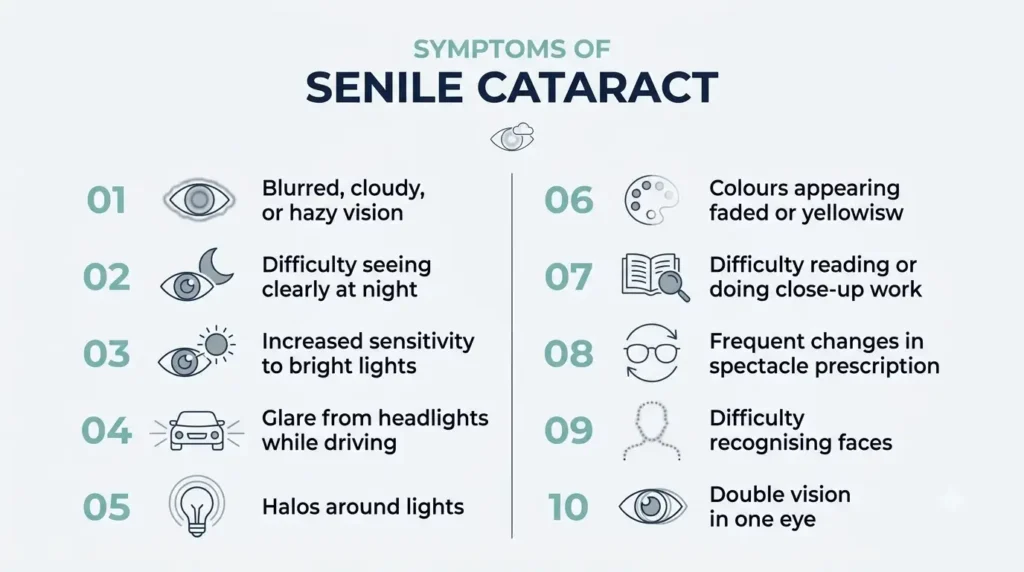
Common symptoms include:
- Blurred, cloudy, or hazy vision
- Difficulty seeing clearly at night
- Increased sensitivity to bright lights
- Glare from headlights while driving
- Halos around lights
- Colours appearing faded or yellowish
- Difficulty reading or doing close-up work
- Frequent changes in spectacle prescription
- Difficulty recognising faces
- Double vision in one eye
When Should You See an Eye Doctor?
If your vision is becoming increasingly blurred, you are having difficulty driving at night, or glare is affecting your daily activities, schedule a comprehensive eye examination. Early evaluation can also help identify other eye conditions that may cause similar symptoms.
Stages of Senile Cataract
Cataracts can progress gradually, and the degree of lens clouding can vary from person to person.
Immature Cataract
In an immature cataract, the lens is only partially cloudy. Some clear areas of the lens remain, so vision may still be relatively useful, although blurring, glare, or other symptoms can occur.
Mature Cataract
A mature cataract occurs when the lens becomes extensively or completely cloudy. Vision may be significantly reduced, making activities such as reading, recognising people, or moving around independently more difficult.
Advanced Cataract
A long-standing or advanced cataract can cause severe vision impairment and may be associated with complications. Regular eye examinations can help an ophthalmologist assess cataract progression and determine the appropriate time for treatment.
Types of Senile Cataract
Senile cataracts can develop in different parts of the lens.
Nuclear Cataract
A nuclear cataract develops in the central part, or nucleus, of the lens. It can cause gradual blurring and changes in the way colours are perceived.
Cortical Cataract
A cortical cataract affects the outer portion of the lens. It may cause glare, halos, and difficulty with vision, particularly in certain lighting conditions.
Posterior Subcapsular Cataract
A posterior subcapsular cataract develops toward the back of the lens. It can affect near vision and may cause significant glare, particularly in bright light.
How Is Senile Cataract Diagnosed?
An ophthalmologist can diagnose a cataract through a comprehensive eye examination. Depending on the patient’s condition, the examination may include:
- Visual acuity testing to check how clearly you can see
- Slit-lamp examination to examine the lens and other structures of the eye
- Dilated eye examination to assess the retina and optic nerve
- Eye pressure measurement when required
- Review of medical history, medicines, and existing eye conditions
These examinations help determine whether a cataract is affecting vision and whether another eye problem may also be present.
How Is Senile Cataract Treated?
Can Senile Cataract Be Treated Without Surgery?
In the early stages, updated glasses, brighter lighting, magnification, and other visual aids may make certain activities easier. However, these measures cannot remove an existing cataract or make the cloudy lens clear again.
When the cataract begins to interfere significantly with everyday activities, an ophthalmologist may recommend surgery.
Cataract Surgery
Cataract surgery is the definitive treatment for a visually significant cataract. During the procedure, the cloudy natural lens is removed and replaced with an artificial intraocular lens (IOL).
Modern cataract surgery commonly uses techniques such as phacoemulsification, in which the cloudy lens is broken into small pieces and removed through a small incision before the IOL is placed inside the eye.
The type of procedure and IOL recommended will depend on factors such as eye health, visual requirements, and the ophthalmologist’s assessment.
Innocent Hearts Eye Centre, Jalandhar:
- We offer advanced diagnostic tools
- Expert cataract surgeons like Dr. Rohan Bowry
- Latest technologies like Phacoemulsification and Laser Cataract Surgery
- Personalized lens options for clear post-op vision
📞 Book your appointment now via WhatsApp at +91-9875969672 or visit our website to schedule an in-person consultation.
What Are the Different Types of IOLs?
An intraocular lens, or IOL, is the artificial lens implanted during cataract surgery. Different types are available depending on a patient’s visual needs.
- Monofocal IOL: Usually provides clear vision at one main distance.
- Multifocal IOL: Designed to provide vision at more than one distance and may reduce dependence on glasses for some activities.
- Toric IOL: Designed to correct astigmatism along with cataract-related vision problems.
The most suitable IOL is not the same for everyone. Your ophthalmologist will consider your eye health, lifestyle, existing vision problems, and expectations before recommending a lens.
Recovery After Cataract Surgery
Cataract surgery is commonly performed as a day-care procedure, but recovery continues after the operation. Your doctor may prescribe eye drops to help with healing and prevent infection or inflammation.
Vision can improve gradually after surgery, although the recovery experience varies between patients. Follow-up examinations are important to monitor healing and vision. You should also follow your ophthalmologist’s instructions about eye care and when to resume specific activities.
Can Senile Cataract Be Prevented?
Age-related cataracts cannot always be prevented. However, certain habits may help protect your eye health and potentially reduce some risk factors.
These include:
- Protecting your eyes from excessive UV exposure
- Avoiding smoking
- Maintaining healthy blood sugar levels
- Eating a balanced diet
- Managing existing health conditions
- Having regular eye examinations
If you notice a gradual change in your vision, do not wait for the cataract to become advanced before getting your eyes checked.
Conclusion
Senile cataract, or Motiyabind, is a common age-related condition that can gradually affect the clarity of vision. Cataract symptoms such as blurred vision, glare, difficulty seeing at night, and faded colours should not simply be dismissed as part of getting older.
Regular eye examinations can help detect cataracts and other eye conditions early. When a cataract starts interfering with daily activities, cataract surgery can restore clearer vision by replacing the cloudy natural lens with an artificial intraocular lens. If you notice worsening or cloudy vision, consult an ophthalmologist for a proper eye examination and personalised treatment advice.
References
- American Academy of Ophthalmology : Senile Cataract: The Case Against Light
- Ophthalmol J: Risk factors associated with development of senile cataract
- Journal of Community Medicine and Health Solutions : Senile Cataract
Also Read
- मोतियाबिंद सर्जरी का सही समय: लक्षण, मिथक और विशेषज्ञ सलाह
- आँखों में लाल धब्बों के कारणों की अनदेखी कैसे महंगी पड़ सकती है
- Types of Cataract Lenses: A Complete Guide to Choosing the Right Lens for Your Eyes
- What is Cataract and how is it treated?
- What is the Difference Between Cataract and Glaucoma?
- SMILE Pro Eye Surgery for Astigmatism
- Myths and Misconceptions About SMILE Pro Eye Surgery
- Understanding Smile Pro Eye Surgery
- 10 Natural Ways to Improve Your Vision – Bye Bye Glasses!
- Comparing Smile Pro Eye Surgery to Other LASIK Procedures
Google Map
Frequently Asked Questions About Senile Cataract
Yes. Motiyabind is a commonly used term in India for cataract. Senile cataract refers to a cataract that develops primarily due to age-related changes in the natural lens of the eye.
Early symptoms may include mild blurred or cloudy vision, increased glare, difficulty seeing at night, faded colours, and frequent changes in spectacle prescription. Symptoms usually develop gradually.
Senile cataract is associated with ageing and is more common in older adults. However, there is no specific age at which everyone develops cataracts, as factors such as diabetes, UV exposure, smoking, medications, and overall eye health can influence when they appear.
No. Glasses and visual aids may help manage vision problems in the early stages, but they cannot remove or reverse a cataract. When the cataract starts significantly affecting daily activities, cataract surgery may be recommended.
Cataracts can vary in severity. An immature cataract has partial lens clouding, while a mature cataract has extensive or complete clouding of the lens. Long-standing advanced cataracts can cause severe vision impairment and may lead to complications.