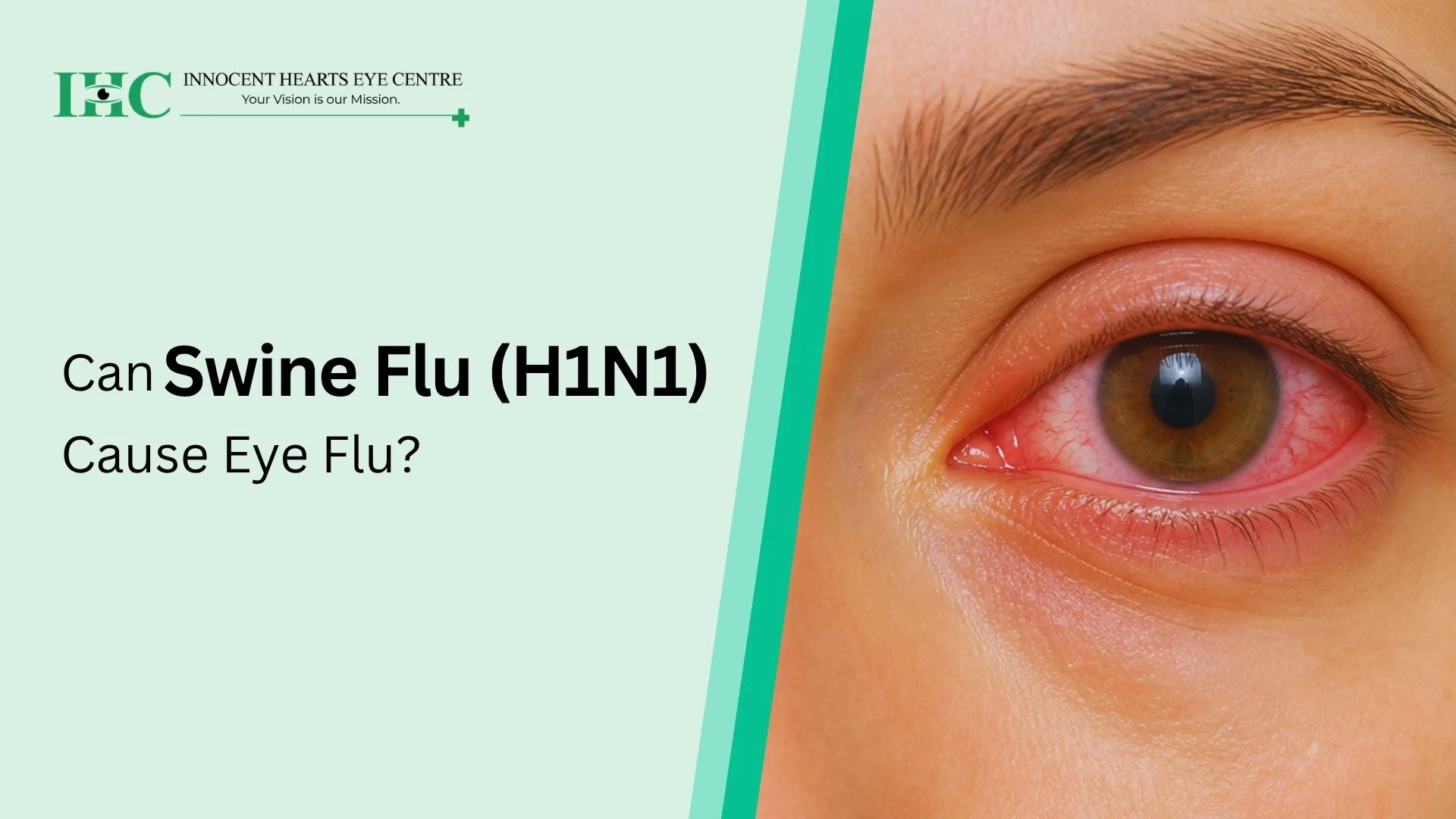
Imagine you have just spent three exhausting days in bed with a high viral fever, severe body aches, and a blocked nose. Finally, the fever breaks. You wake up feeling like yourself again, step up to the bathroom mirror, and look closely. One of your eyes is blood-red, tearing up constantly, and feels like someone rubbed a handful of sand under your eyelid.
Then the phone calls and family advice start. A relative takes one look at you and says, “Lagta hai eye flu ho gaya hai.” Someone else mentions that Swine Flu (H1N1) cases are circulating in the city, and suddenly your mind starts racing. Could this fever have affected my eyes? Is Swine Flu dangerous for my vision? Can H1N1 cause eye flu, or did I catch something else while my immune system was down?
Red, watery or irritated eyes during a fever can be worrying, especially when people are talking about swine flu (H1N1). The good news is that most red-eye symptoms linked to viral illnesses improve without permanent damage. Still, not every red eye is “eye flu,” and pain or vision changes need prompt attention.
Can swine flu (H1N1) cause eye flu?
Yes, H1N1 can be associated with red, watery eyes and viral conjunctivitis (commonly called eye flu), but it is not the main or most reliable sign of H1N1.
H1N1 is an influenza A virus that mainly affects the respiratory system the nose, throat and lungs. Typical symptoms include fever or chills, cough, sore throat, blocked or runny nose, body aches, headache and fatigue. Watery red eyes and eye pain can also occur with influenza.
Medical studies have reported conjunctivitis and other eye findings in some people with pandemic H1N1. However, a red eye after fever does not prove that H1N1 directly caused it. Common viral conjunctivitis, allergies, dry eyes, irritants and bacterial infections can all cause similar symptoms. (Source: PubMed )
What is “eye flu”?
“Eye flu” is a common term for conjunctivitis, inflammation of the thin, clear membrane covering the white of the eye and the inside of the eyelids.
Viral conjunctivitis is the most common type. It may happen with or after a cold, flu or other respiratory infection. Viral and bacterial conjunctivitis can spread through infected tears or discharge, unwashed hands, shared towels, makeup, pillowcases and frequently touched objects.
Also read: Conjunctivitis (Pink Eye): Meaning, Symptoms, Diagnosis, Treatment
Why can your eyes turn red during flu?
Red eyes during or after a flu-like illness may happen because:
- Influenza itself can cause watery, red or painful eyes.
- Viral conjunctivitis can occur alongside a respiratory infection.
- Touching the eyes after coughing, sneezing or wiping the nose can transfer germs.
- The cause may be unrelated to H1N1, such as allergies, dry eye, another virus or a bacterial infection.
The eye surface and nose are connected through the tear-drainage system. That is one reason respiratory infections and eye symptoms can sometimes appear together.
What are the first signs of eye flu?
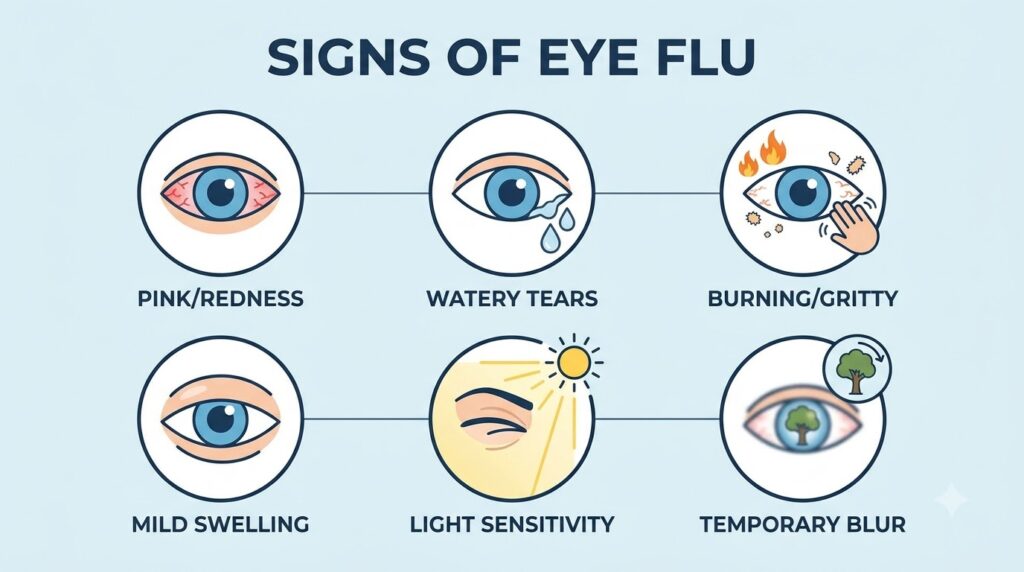
The first signs of viral conjunctivitis often include:
- Pink or bloodshot eye
- Clear, watery tearing
- Burning, stinging or a gritty “sand in the eye” feeling
- Mild eyelid swelling
- Sensitivity to bright light
- Mild blurring that improves after blinking or wiping away tears
- Symptoms beginning in one eye and then spreading to the other within a few days
Viral conjunctivitis usually causes watery discharge. Thick yellow or green discharge that sticks the eyelids together is more suggestive of bacterial conjunctivitis. Intense itching in both eyes is more typical of an allergy.
What do “flu eyes” look like?
Eyes affected by viral conjunctivitis may look:
- Pink, red or bloodshot
- Watery and glossy
- Slightly puffy around the eyelids
- Irritated or sensitive to light
- Crusted at the lashes after sleep
A severely painful red eye, a white spot on the clear front of the eye, or persistent blurred vision is not something to dismiss as routine eye flu.
Eye flu vs bacterial infection vs allergy
| Feature | Viral Eye Flu | Bacterial Conjunctivitis | Eye Allergy |
| Discharge | Clear and watery | Thick, yellow or green | Watery or stringy |
| Itching | Mild or variable | Usually mild | Often intense |
| Eyes affected | Often starts in one, then both | May affect one or both | Usually both eyes |
| Cold/flu symptoms | Can occur | Less typical | No fever; allergy symptoms may occur |
| Contagious? | Usually yes | Can be | No |
An eye examination is the best way to confirm the cause when symptoms are severe, persistent or unclear.
How do you treat flu in your eyes?
There is no instant cure for viral eye flu. Most mild cases improve with supportive care.
- Use a cool, clean compress over closed eyelids.
- Consider lubricating/artificial-tear eye drops for comfort.
- Wash hands often and avoid rubbing the eyes.
- Use separate towels, pillowcases and face cloths.
- Do not share eye drops, makeup, contact lens cases or cosmetics.
- Stop wearing contact lenses until symptoms have fully settled and an eye professional says it is safe to restart.
- Discard disposable contact lenses, lens solution and eye makeup used during the infection.
Do not self-medicate with steroid eye drops. Do not use antibiotic eye drops unless a clinician has diagnosed a bacterial infection or prescribed them. Antibiotics do not treat viral conjunctivitis.
If H1N1 or another flu infection is suspected, speak to a medical professional promptly particularly if you are pregnant, very unwell, elderly, immunocompromised, or have asthma, diabetes, heart disease or chronic lung disease. Prescription flu antivirals work best when started within one to two days of symptom onset and are especially important for people at higher risk of complications.
How long do flu eyes last?
Most routine viral conjunctivitis improves within 7 to 14 days. Some cases can take two to three weeks or longer to settle completely. For uncomplicated influenza, symptoms usually resolve in 3 to 7 days, although cough and tiredness can continue for more than two weeks. (Source: CDC )
Can influenza cause eye damage?
Permanent eye damage from the flu is uncommon. However, medical literature has reported rare, more serious H1N1-related eye complications involving the retina, optic nerve or inflammation inside the eye. These are not routine “eye flu” symptoms and need urgent specialist care. ( Influenza-associated ocular complications review)
Seek urgent eye care if you have:
- Significant eye pain
- Intense redness
- Persistent blurry or reduced vision
- Light sensitivity that is severe or worsening
- Double vision
- A white or cloudy spot on the eye
- Increasing eyelid swelling
- A red eye while wearing contact lenses
- Symptoms that worsen or do not begin improving after a few days
Newborns with red, swollen eyelids or eye discharge should be seen by a doctor urgently.
Is swine flu a serious disease?
H1N1 can be mild, but influenza can also cause serious complications such as pneumonia, worsening of asthma or heart disease, respiratory failure and secondary bacterial infections. The risk is higher in young children, older adults, pregnant people, people with chronic health conditions and people with weakened immune systems.
Get emergency medical help for flu symptoms with trouble breathing, chest pain, dehydration, confusion, seizures, severe weakness or rapidly worsening illness.
Is H1N1 more serious than covid-19?
There is no single answer. The severity of H1N1 and COVID-19 depends on the circulating strain, a person’s age, underlying health conditions, previous immunity, vaccination status and access to treatment. Both can cause severe disease and complications in high-risk individuals. Avoid relying on comparisons alone, seek medical advice based on your symptoms and risk factors.
Which organ is affected by swine flu?
H1N1 primarily affects the respiratory system:
- Nose
- Throat
- Lungs
In severe illness, flu can affect other parts of the body through complications, including the lungs, heart, brain and muscles.
How can you prevent eye flu during flu season?
- Wash hands with soap and water for at least 20 seconds.
- Avoid touching your eyes, nose and mouth with unwashed hands.
- Cover coughs and sneezes with a tissue or elbow.
- Do not share towels, pillows, cosmetics, contact lenses or eye drops.
- Clean frequently touched surfaces.
- Stay home when feverish or too unwell for normal activities.
- Follow local guidance on annual influenza vaccination; seasonal flu vaccines can protect against included H1N1 strains.
Final takeaway
H1N1 can occasionally be linked with red, watery eyes or viral conjunctivitis, but eye flu is not a defining symptom of swine flu. Most cases of mild viral conjunctivitis recover with supportive care in one to two weeks. The most important step is not to assume every red eye is harmless: severe pain, vision changes, strong light sensitivity or worsening symptoms require an urgent eye examination.
At Innocent Hearts Eye Centre, an ophthalmologist can identify whether your red eye is due to viral conjunctivitis, allergy, bacterial infection, dry eye, contact lens irritation or another condition, and recommend safe, targeted treatment.
Disclaimer: This article is for general education and does not replace a consultation, diagnosis or treatment plan from a qualified medical professional.
Take the Next Step
If you are considering removing your specs permanently, the first step is a proper eye evaluation.
At Innocent Hearts Eye Centre, you can get a detailed assessment and understand which treatment option is suitable for you, based on your eye condition, not assumptions.
📞 Call us at +91-98759 69672
🌐 Visit https://innocentheartseyecentre.com
📍 Book an appointment at Punjab’s First ZEISS Refractive Suite
Google Map
See the world sharp, clear, and glasses-free—without second-guessing your decision.
Real Patients, Real Reviews
Also Read
- Why is a Regular Eye Check-up Important?
- Understanding Smile Pro Eye Surgery
- Comparing Smile Pro Eye Surgery to Other LASIK Procedures
- 10 Natural Ways to Improve Your Vision – Bye Bye Glasses!
- Understanding Presbyopia: Causes, Symptoms, Diagnosis, and Advanced Treatments
- PRESBYOND Laser Blended Vision At Innocent Hearts Eye Centre
- Punjab’s First ZEISS Refractive Suite Now at Innocent Hearts Eye Hospital, Jalandhar
- What to Eat After Cataract Surgery?
- What Happens When Cataract Matures?
- मोतियाबिंद सर्जरी का सही समय: लक्षण, मिथक और विशेषज्ञ सलाह
Frequently Asked Questions About H1N1, Eye Flu and Red Eyes
Yes. Influenza can sometimes cause watery, red or irritated eyes. However, flu mainly affects the nose, throat and lungs, so a red eye during fever may also be due to common viral conjunctivitis, allergy, dry eye or another eye problem.
Yes, H1N1 has been associated with conjunctivitis in some cases. However, it is not a defining symptom of H1N1, and red eyes alone cannot confirm swine flu. A medical evaluation or influenza test may be needed when flu symptoms are severe or the person has a higher risk of complications.
Mild viral conjunctivitis usually improves within 7 to 14 days. Some cases may take two to three weeks or longer to clear completely. See an eye doctor if symptoms worsen, vision changes occur, or there is no improvement after a few days.
Early symptoms often include redness in one eye, watery tearing, burning or irritation, a gritty feeling, mild eyelid swelling and discomfort in bright light. The infection may spread to the second eye within a few days.
“Flu eyes” or viral conjunctivitis can make the eyes look pink or bloodshot, watery, glossy and mildly swollen. The discharge is usually clear and watery. Thick yellow or green discharge is more suggestive of a bacterial infection.