
When people hear that their eye pressure is “high,” the first thought that comes to mind is glaucoma. But here’s the thing — having high eye pressure doesn’t always mean you have glaucoma. It could also mean you have ocular hypertension.
Both conditions sound similar and are closely related, but they’re not the same. Understanding the difference between ocular hypertension and glaucoma can help you protect your vision before any serious damage happens. Let’s break it down and see why regular eye exams matter more than most people realize.
What is Ocular Hypertension?
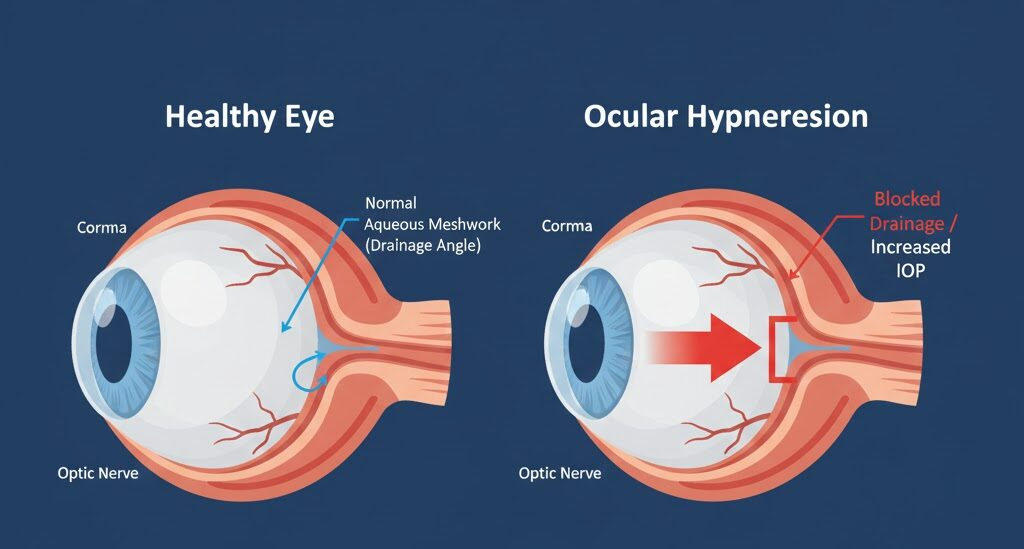
Ocular hypertension means your intraocular pressure (IOP) — that’s the pressure inside your eye — is higher than normal, but without any signs of optic nerve damage or vision loss.
Think of it as a warning signal rather than a disease itself. Your eyes are under extra pressure, but they haven’t caused any harm yet. This is why ophthalmologists often refer to ocular hypertension as a “pre-glaucoma” condition — it’s not vision-threatening now, but it can become so if left unchecked.
Normal eye pressure: 10–21 mmHg
Ocular hypertension: above 21 mmHg
If your IOP consistently stays above this range, your doctor will likely monitor you more closely, as it can increase your risk of developing glaucoma later. In many cases, people with ocular hypertension are advised to schedule frequent eye pressure checks and optic nerve scans to detect early changes.
What is Glaucoma?
Glaucoma, on the other hand, is a progressive eye disease. It happens when high eye pressure (or even normal pressure in some cases) damages the optic nerve, the part of your eye responsible for carrying visual signals to the brain.
Once this nerve is damaged, the loss is permanent. The worst part? Symptoms of glaucoma often develop silently — most patients don’t realize anything is wrong until vision starts to narrow or blur.
There are different types of glaucoma, each with unique causes and progression patterns:
- Primary open-angle glaucoma – the most common type of glaucoma; it develops slowly and painlessly over years.
- Angle-closure glaucoma – occurs when the eye’s drainage angle suddenly gets blocked, causing a rapid rise in pressure and severe pain; this is a medical emergency.
- Normal-tension glaucoma – optic nerve damage occurs even though eye pressure is within the normal range.
- Secondary glaucoma – results from another condition, such as inflammation, injury, or steroid use.
Each type of glaucoma can cause irreversible optic nerve damage if not detected and managed early. That’s why understanding where you stand — ocular hypertension or glaucoma — is crucial for preserving your sight.

Ocular Hypertension vs Glaucoma: The Key Differences
| Feature | Ocular Hypertension | Glaucoma |
| Definition | High intraocular pressure without optic nerve damage | Damage to the optic nerve, often due to high intraocular pressure |
| Optic Nerve Condition | Normal | Damaged |
| Vision Loss | None | Progressive, irreversible vision loss |
| Symptoms | Usually none | Often silent, but may cause tunnel vision or blind spots in later stages |
| Risk of Vision Loss | Possible in the future | Already occurring |
| Treatment | Regular monitoring, sometimes pressure-lowering drops | Requires lifelong treatment to control pressure and protect vision |
The key point is this: ocular hypertension vs glaucoma isn’t just a matter of terminology — it’s the difference between risk and damage. One is manageable with watchful care; the other demands active, ongoing treatment to prevent blindness.
How Are They Diagnosed?
Both conditions are detected through comprehensive eye examinations. Your eye specialist will perform several tests to get a complete picture:
- Intraocular Pressure (IOP) Measurement (Tonometry):
Measures the pressure inside your eye to identify high eye pressure. - Optic Nerve Evaluation:
Your eye doctor examines the optic nerve head for early signs of damage. - Visual Field Test:
Checks for blind spots or side-vision loss — common symptoms of glaucoma in later stages. - Corneal Thickness Measurement (Pachymetry):
Corneal thickness affects how pressure readings are interpreted.
At Innocent Hearts Eye Centre, Jalandhar, we use OCT (Optical Coherence Tomography) and the ZEISS Refractive Suite for ultra-precise optic nerve imaging. This advanced technology helps us detect subtle structural changes long before any vision loss occurs. If you’re searching for reliable glaucoma treatment in Jalandhar, these technologies give you an early edge.
Who is at Risk?
You’re more likely to develop ocular hypertension or glaucoma if you:
- Are above 40 years old
- Have a family history of glaucoma
- Are highly myopic (nearsighted)
- Have diabetes or hypertension
- Regularly use steroids (eye drops or oral)
- Have had eye injuries or previous surgeries
If any of these apply, make sure to have your eyes checked regularly — ideally once a year. Early detection can prevent optic nerve damage and reduce your chances of ever needing glaucoma surgery.
Can Ocular Hypertension Turn into Glaucoma?
Yes — but not always.
Not everyone with ocular hypertension will develop glaucoma, but it significantly increases your risk. Studies show that around 10% of people with untreated ocular hypertension develop glaucoma within 5 years.
That’s why eye specialists treat ocular hypertension as a red flag. With consistent monitoring, eye pressure management, and healthy lifestyle choices, it’s possible to prevent optic nerve damage entirely.
Treatment Options
For Ocular Hypertension
- Regular monitoring: Routine eye exams every 3–6 months.
- Eye drops: Used to lower pressure if readings remain high.
- Lifestyle care: Stay active, maintain healthy blood pressure, limit caffeine, and avoid smoking.
For Glaucoma
- Prescription eye drops: The first and most common line of defense to reduce IOP.
- Laser treatment (like SLT): Improves fluid drainage from the eye.
- Glaucoma surgery: Procedures like trabeculectomy or glaucoma drainage implants may be required if other treatments fail.
At Innocent Hearts Eye Centre, our glaucoma specialists customize every treatment plan to suit your needs and the specific type of glaucoma you have. Whether it’s early-stage management or complex glaucoma surgery, our focus remains on preserving your vision safely and effectively.
When Should You See an Eye Specialist?
Book an eye check-up immediately if you notice any of the following:
- Blurred or patchy vision
- Severe eye pain or redness
- Halos around lights
- Headaches linked with eye strain or pressure
- Gradual narrowing of side vision
Even without symptoms, everyone over 40 — especially those with a family history of glaucoma — should get an annual comprehensive eye exam. Catching ocular hypertension early can stop glaucoma before it starts.
The Bottom Line
Ocular hypertension and glaucoma may sound similar, but they differ in one major way — optic nerve damage.
Ocular hypertension is the warning stage, while glaucoma is the damage stage.
With modern diagnostics, regular monitoring, and timely intervention, glaucoma-related vision loss can often be prevented.
At Innocent Hearts Eye Centre, Jalandhar, we specialize in early detection, glaucoma management, and glaucoma surgery under the expert care of Dr. Rohan Bowry, the best eye doctor in Punjab.
If you’ve been told you have high eye pressure, ocular hypertension, or are at risk for glaucoma, don’t wait. Book your detailed eye examination today — because saving your sight starts with a single check-up.
Also Read
- Glaucoma vs Normal Eye Pressure: Key Differences Explained
- Glaucoma: The Silent Thief of Vision You Shouldn’t Ignore
- Early Signs and Symptoms of Glaucoma: A Comprehensive Guide
- What to Eat After Cataract Surgery?
- What Happens When Cataract Matures?
- मोतियाबिंद सर्जरी का सही समय: लक्षण, मिथक और विशेषज्ञ सलाह
- आँखों में लाल धब्बों के कारणों की अनदेखी कैसे महंगी पड़ सकती है
- Types of Cataract Lenses: A Complete Guide to Choosing the Right Lens for Your Eyes
- What is Cataract and how is it treated?
- What is the Difference Between Cataract and Glaucoma?
- SMILE Pro Eye Surgery for Astigmatism
Book Your Consultation Today
🩺 Dr. Rohan Bowry, our leading eye surgeon, brings years of experience in managing complex glaucoma cases.
📞 Call us at: +91-98759 69672
📍 Visit our Jalandhar clinic
Take the first step toward better eye health — your vision deserves it.
Book your consultation with Dr. Rohan Bowry today and take the first step towards clearer vision.
Google Map
Real Patients, Real Reviews
Frequently Asked Questions (FAQs) About Ocular Hypertension vs Glaucoma
No, ocular hypertension means high eye pressure without optic nerve damage, while glaucoma involves both increased eye pressure and damage to the optic nerve.
Yes. People with ocular hypertension are at higher risk of developing glaucoma over time if not monitored and managed properly.
It’s diagnosed through a comprehensive eye exam, including tonometry to measure intraocular pressure (IOP), optic nerve evaluation, and visual field tests.
Treatment may include regular eye monitoring or prescription eye drops to lower IOP. In some cases, laser or surgical procedures may be recommended.
While glaucoma can’t be completely prevented, early detection and treatment can significantly slow or stop vision loss progression.